
Diagnosis of tasks and competencies
Selection of low-risk, high-frequency sales assignmentsRecovering clients ' journeys, existing CRMs, knowledge materials, user privileges, manual time-consuming and erroneous consequences.
The value of the AI sales assistant is not a substitute for a sales commitment, but a reduction in information searches, duplicate entries and follow-up omissions, allowing sales to obtain a recognizable preparation of customers, commercials and the context of the contract, and to safely return key results to CRM.
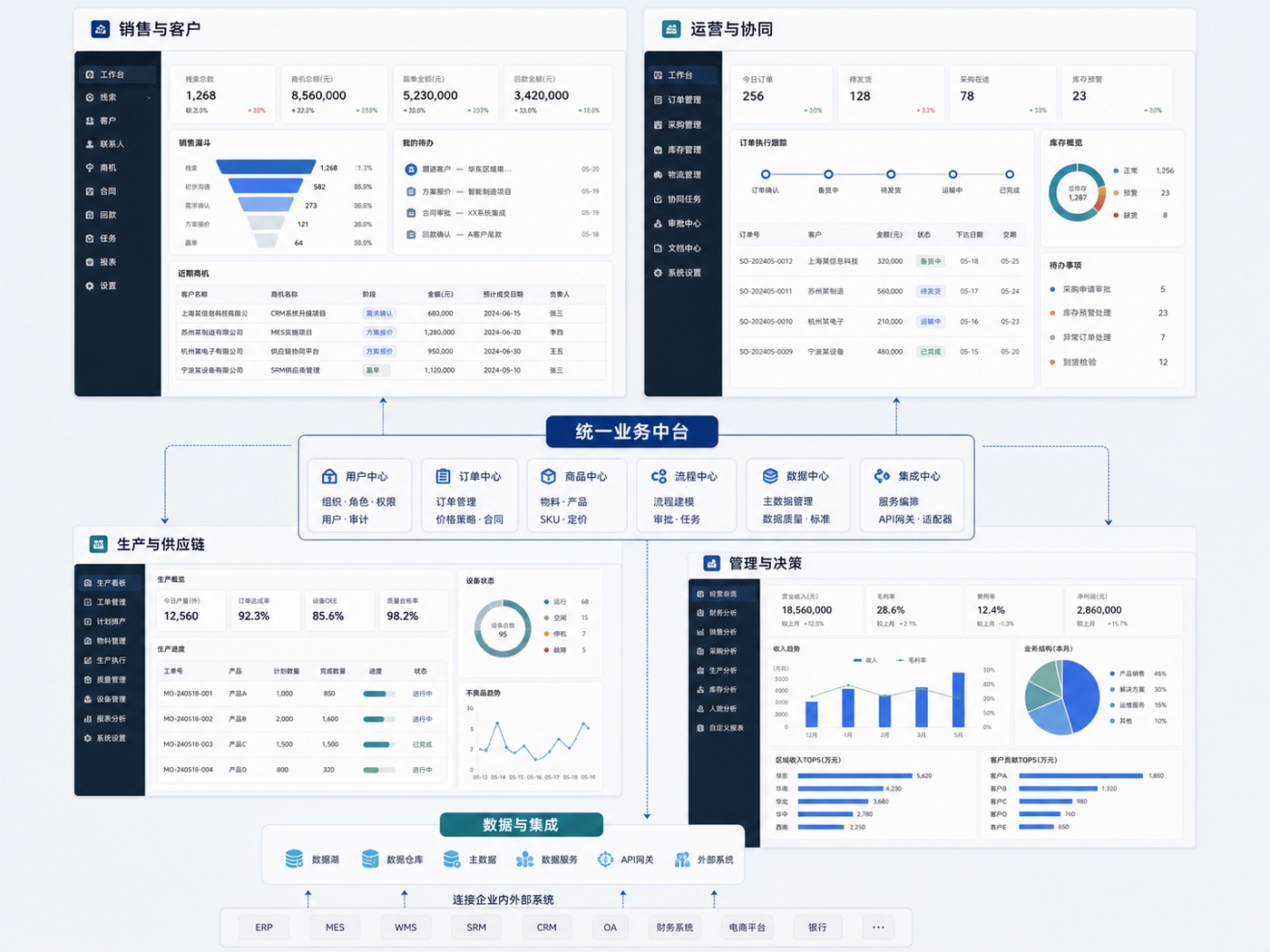
The first issue does not recommend the establishment of a generic Agent that will cover all sales. A high frequency task should be selected from the summary of meetings and to-do, client information preparation, follow-up alerts or draft programmes, first to validate accuracy, save time and sell, and then access the CRM identity, customer privileges, approval and write-back capability.
The level of uncertainty is reduced by stages before deciding on the scale of inputs and the modalities of cooperation.
Recovering clients ' journeys, existing CRMs, knowledge materials, user privileges, manual time-consuming and erroneous consequences.
The use of authentic samples to build abstract, retrieval or draft capabilities, to retain manual confirmation and record modifications.
Access to identity, customer business, write-back, audit, monitoring and continuous evaluation.
The AIS exports are used as a proxy for the official confirmation of prices, commitments and contracts by the sales, finance, legal affairs or managers.
Generic AI is not aware of current client, product, price policy and historical communication
Automatically generated mail or quotations may contain false promises and expired information
Sales are reluctant to re-enter, CRM data is long incomplete
Agent has access to the system, but lacks user identity, clearance and operational audit
Only the number of times generated is counted, and no follow-up, implementation and transformation quality is observed
Integration of clients, contacts, business opportunities, activities and mission context
Summary of conference mail, to-do extraction, follow-up on reminders and business opportunity phase recommendations
Enterprise knowledge, product information, case studies, price and marketing policy RAG retrieval
Programme, mail, quotations and draft contracts generated and based on a presentation
CRM, ERP, OA, mail, calendar, services integration
User identification, client affiliation, field privileges, approval and audit
Low confidence, price commitments, sensitive information and manual confirmation of high-risk movements
Sales adoption, task completion, manual modification, delay, cost and operating of operational indicators
The service boundaries, budget bases and modalities of implementation for different phases of the project are not identical and can be further assessed in conjunction with the following.
The final delivery boundaries are defined according to the scope of services, the construction phase and the modalities of cooperation, and are described below as common results.
Service coverage and business closure required for the first phase: client, contact person, business opportunities, integration of activities and tasks, meeting mail summary, to-do extraction, follow-up on alarms and business opportunity recommendations
Level of integrity of existing codes, data, systems, equipment and documents, and scope of coverage to be audited, relocated or re-engineered
Number of third-party interfaces, coordination responsibilities, data quality, unusual compensation and external supplier cooperation
Non-functional requirements such as performance, availability, security, authority, audit, compliance and access windows
Delivery depth and long-term responsibility: security, functionality, quality, performance and operational pilot reports, deployment, training, operational indicators and knowledge transfer materials, and quality assurance, peacekeeping continuity ranges
Project objectives, responsible persons and acceptance criteria are not established
Key accounts, data, interfaces or business authorizations not available
Only the maximum price or very short cycle is sought, and the necessary tests and quality control are not accepted
The following are used to explain the implementation methodology, the data calibre and the boundaries of responsibility, and are not used as a proxy for project judgement by functional lists.
When the project is launched, select a business chain that needs most improvement, interview the actual user and take up a recent sample. Record processing, average time-consuming, waiting time, number of returns, unusual numbers and manual contact points around “clients, contacts, business opportunities, activities and mission context integration”; and, if available data are incomplete, use manual desk accounts for one to two weeks in a row as a baseline. Without a baseline, only the interface can be evaluated for completion at the end of the project, and it is not possible to judge whether AI sales assistant and CRM Copilot are bringing about sustainable business changes.
The baseline should also indicate the scope of the statistics and exclusions. For example, processing time begins with the availability of information or with the first submission by the client, the exception fails to include third-party interfaces, and manual modifications are minor proofreading or re-processing.
The first issue, which does not seek to cover all departments, is about creating a closed loop that can operate in real terms around “meetings e-mail summaries, to-do extraction, follow-up alerts and business opportunity phase recommendations”: clear input, processing rules, system actions, responsible roles, unusual destinations and final output. Key players include at least business owners, actual users, technical interfaces and receiving and inspection managers, avoiding demand being described by management and being used on the Internet by another group.
The need assessment corresponds each competency to the business scene, user role and sample acceptance. Matters that do not provide legitimate data, interfaces or decision makers should be included as a pre-condition or subsequent stage, and should not be included quietly in a fixed-range offer.
The typical path is to select a high frequency sales task, take stock of customer data knowledge and privileges, complete the PoC with a real dissensitisation sample, access CRM and business knowledge. Each stage should result in visible results, such as flow charts, prototypes, interface contracts, test records, deployment notes or running demonstrations.
The stage demonstration is not “looks fit to work”. A representative sample should be used to cover normal processes, missing fields, repeat requests, inadequate authority, time overruns and historical data anomalies from external services, and to identify problems that arise only in the production environment at an early stage.
The project should at least reconcile sales assignments, customer travel and AI application boundary statements, CRM Copilot interactive prototype and system architecture, ACDS back-end, Agent and workflow code, and confirm source or configuration attribution, account management, build deployment, data backup, fail response and subsequent maintenance responsibilities. In addition to functional acceptances, check privileges, security, performance, logbooks, recoverability and key user training to ensure that client teams are able to use and understand system boundaries independently.
Assuming a process baseline of 800 items per month, an average of 18 minutes per unit, and a return rate of 12 per cent, this is only an example, not a client's performance. A line should be followed by four to eight consecutive weeks of continuous observation at the same calibre, before judging whether to achieve a reduction in sales preparation and recording time, a more complete client context and next steps, and an increase in the quality and visibility of CRM data.
This page is organized around real service issues such as the development of AIS sales assistants, enterprise AI sales assistants, CRM Copilot, CRM access to AI. Keywords are used to help users and search systems identify themes, without implying a commitment to fixed effects; final scope, cycle, budget and indicators are based on project diagnosis, contract and acceptance baseline.
Each stage has clear objectives, participatory roles and assessable outcomes, and important decisions are not left to the end of the project.
Following up and visit a customer, you will be able to understand the input, manual judgement and CRM records of the sales assistant.
Codex can organize client profiles, key people, unfulfilled commitments, risks and suggested questions within the mandate. External facts and client data in the bulletins are not supposed to be sourced as a client's position.
For more information.Original video courseReliance on sales of personal memory can result in follow-up omissions, slotting and management's inability to judge the quality of business. The value of CRM is not to record a mailing list, but to keep client phases, next steps, duty bearers and key interactions visible.
For more information.The most common issues before cooperation are clearly stated in advance.
The first issue usually recommends that Mr. S.S. drafts and next recommendations, which are sent after the sale has been confirmed. Only a notice with stable, low-risk and clear terms of reference is suitable for the gradual opening of automatic transmissions and the retention of frequency limits, withdrawals and audits.
Most projects could add independent AI services, sidebars or workstations to existing CRMs, read the context of the authorization and write back the results, and do not need to replace CRMs for AI as a whole.
In addition to summary and quality of production, check client privileges, factual basis, price and commitment, CRM write-back, repeat trigger, manual modification, adoption and timeliness of follow-up.
The meeting confirmed, and the information alerts should not be opened at any time. The information on the low-risk templates can be gradually automated under user authorization, frequency limits and back-to-back rules; personalized mail, prices, discounts, contracts and delivery commitments should be drafted by a Mr. and confirmed by the sales or supervisors. The system also needs to prevent duplicates, erroneous customers, expired prices and tips from being injected.
View full answerCorporate information selection, integration and data governanceThe SSOs do not have the same rights for all users and the business authorization is still controlled by the system. The enterprise also plans the account life cycle, multiple factor certification, separation recovery and emergency login.
View full answerAI data governance and marketing smart applicationPrecedence of high frequency, availability of information, quick review of output and manual background of errors, such as meeting summaries, client background, follow-up to to-do, product case retrieval and draft mail programs. Price commitments, discount approval, contract signing and customer rating are not suitable for failure to perform in the first period.
View full answerAI data governance and marketing smart applicationThe Copilot should not use an administrator account to read all customer data, but should inherit the current sales user identity and control privileges by organization, client affiliation, team, field and action.
View full answerFirst, we have to establish a base of client, business, activity, authority and data responsibility.
For more information.Agent DevelopmentCombining knowledge, tools, processes and manual clearance into taskable tasks
For more information.Cost guidelinesEstimating inputs by tasks, CRM interface, knowledge, privileges, documentation and scope of operation
For more information.Capability sceneCheck client research, follow-up, programme, quote and CRM close loop
For more information.Case sceneDemonstrate how AI Sales Assistants complete information research, meeting summaries, to-do extraction, draft programme proposals and follow-up recommendations in the context of authorized clients and business opportunities, and safely return the results to CRM through manual confirmation.
For more information.