Home / Services / Enterprise AI Custom Development and Custom AI Software Development
PROFESSIONAL SERVICE

Enterprise AI Custom Development

ZhiHua Tech designs and delivers production-ready enterprise AI applications that connect knowledge, customer service, document processing and workflow automation with existing business systems. We can begin with a focused PoC or improve an existing platform, with scope, cost, acceptance criteria and handover assets agreed before development.

AI capabilities connected to complete business workflowsReusable enterprise knowledge, rules and integrationsTraceable output quality, system actions and operating costSource code, configuration, data and deployment assets included

You do not need a complete requirements document for the first conversation. Tell us the business problem, your current systems and preferred timeline; we will help assess the scope, delivery approach and whether a PoC is appropriate.

Enterprise AI Custom Development Linking Modeled Business System and Manual Approval
From your business.

You're trying to solve this. It's probably these business problems.

View complete service and delivery
An example of an AI business process Non-client performance

Clients send in requests for offers, AI provides backup, manual confirmation, and then executes.

The first phase can be limited to “info-sorting and drafting” and does not automatically send quotations or substitute professional judgement.

Clients receive not only a dialogue window, but also agreed interfaces, interfaces, source codes, testing and deployment information.

There are real cases of dissensitization.

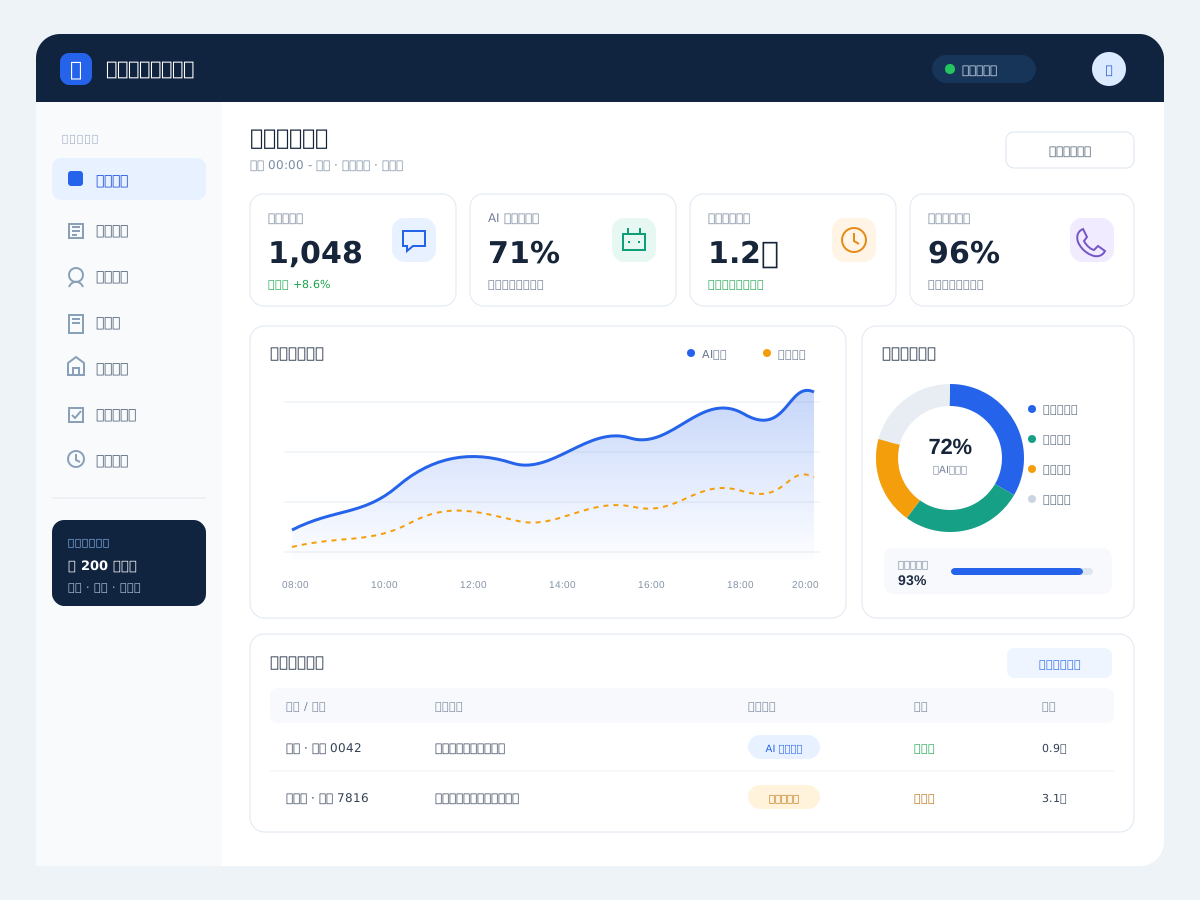
A. Visitor service at the chain: knowledge, business queries and teamwork

Cases have been disclosed, including knowledge base, orders and member queries, manual takeovers and online assessment processes. It helps understand how AI enters the business system, with the effect and the evidence calibrated to the case page.

See implementation and verification instructions
The interface for the ACVA is shown, and project evidence is based on case pages

Problems that enterprises usually face

Demand is described as "do an AI", lack of real tasks and acceptance calibration

Modelling is good, but it does not stabilize the connection to business knowledge and business systems.

Psychs, knowledge, interfaces and privileges are managed by different tools and production risks are not controlled

AI output is not re-detectable, errors, costs and manual interventions are not recorded on an ongoing basis

Only pages or accounts are received at the end of the project, and there are no source codes, evaluation and deployment assets

Our core services

01

Custom AI Development Needs Diagnosis, Task Dismantling and First Range Planning

02

Corporate business construction product interfaces, account privileges, task flow and business data management; provision of customized services for enterprise AI, AI manual smart customization development and AI system customization development, as required.

03

Enterprise AI application, large model software, RAGknowledge base and smart question and answer custom development

04

AI Agent, tool call, multistep tasks and manual approval organization

05

Smart passenger service, document recognition, quotation aids, data analysis and visual voice applications

06

ERP, CRM, OA, MES, database and third-party API integration

07

Model selection, model gateway, cloud, mixing and pilvate deproyment

08

Identity clearance, sensitive data protection, audit, abnormal retreat and security testing

09

Real task assessment, greyscale upline, cost monitoring and AgentOps ongoing operations

Project deliverables

The final delivery boundaries are defined according to the scope of services, the construction phase and the modalities of cooperation, and are described below as common results.

DELIVERABLEBusiness scene, scope of needs and AI feasibility analysis
DELIVERABLEInteractive prototype, system architecture, data and interface design
DELIVERABLEAI application back-end, modeling, source code and build script
DELIVERABLEKnowledge management of water currents, hints and rules configuration, version assessment collection
DELIVERABLEBusiness systems interface, competency matrix, audit and abnormality retreat mechanism
DELIVERABLETest and evaluation reports, deployment packages, go-live and roll-back programmes
DELIVERABLEOperation, maintenance, data update, cost governance and knowledge transfer files

How the project budget is assessed

Is the first issue only a document or draft programme generated, or is it multisectoral collaboration, approval and systematic rewriting? First, it is clear that the business closed circle that must be completed is followed by a comparison of inputs under the same scope.

Level of integrity of existing codes, data, systems, equipment and documents, and scope of coverage to be audited, relocated or re-engineered

Number of third-party interfaces, coordination responsibilities, data quality, unusual compensation and external supplier cooperation

Non-functional requirements such as performance, availability, security, authority, audit, compliance and access windows

Delivery depth and long-term responsibility: test and assessment reports, deployment packages, online and rollback programmes, operations, maintenance, data update, cost governance and knowledge transfer files, and quality assurance, peacekeeping continuity ranges

These circumstances do not recommend immediate initiation of full development.

Project objectives, responsible persons and acceptance criteria are not established

Key accounts, data, interfaces or business authorizations not available

Only the maximum price or very short cycle is sought, and the necessary tests and quality control are not accepted

PROJECT DECISIONS

Implementation and acceptance of Enterprise AI Camp Development

First, do you know if the tools are not enough or if the process is not clear?

A complete review of the current task: who provides the information, who judges, who approves the results and where they go. The exclusive offer, customer information privileges, cross-system echo and multi-player collaboration often requires software engineering; simply changing the hint does not mean redevelopment. Demand interviews should also retain the option of "Abstain or solve ", avoiding access to the model for each button.

First-time range locked on a delivery list

For example, the first phase of the Customer Program Assistant can cover only the import of information, authorized knowledge retrieval, draft programmes, manual review and retention of the version. Automatically sent to the client, contract signing, refund judgement may be withheld.

The offer is split by liability for works

The development fee should be broken down into research and prototype, AI mission engineering, business software, system interface, assessment go-live and interface. Model calls, cloud resources, commercial components and ongoing transport stand alone. The supplier is requested to provide a first-range quote on which terminals, organizations and interfaces are included; the change in demand is recorded for additional work, test impact and confirmation of results by both parties, rather than a comparison of the total price.

Two lines of acceptance software and AI effects

Software line check privileges, processes, interface consistency, deployment and take-over; A line check is based on correctness, refusal, manual modification, processing time extension and single task cost. Use an authorized sample that is not debugged and maintains a failed sample. The source code, relying list, hint configuration, evaluation method and account exchange should be included in the range and not replace a runable result with a demonstration video.

Converting acceptance and inspection requirements to reciprocable records

The following is a recommended assessment of the performance of the customer, not of the customer, nor of the uniform commitment to meet the standard.

CheckpointHow do you check it?Avoid miscalculation.
Operational completion rateNumber of tasks to complete the agreed closed circle / included in the evaluationSingle list of rejected answers, manual reworks and interface failures
Manual review costsRecording of total time for reading, checking and modificationYou can't just count the time of the model generation.
HandoverabilityRebuild and run the handover document in the agreed environmentRecording of missing accounts, dependence and failure to reproduce
Further examination of the evidence and the boundary

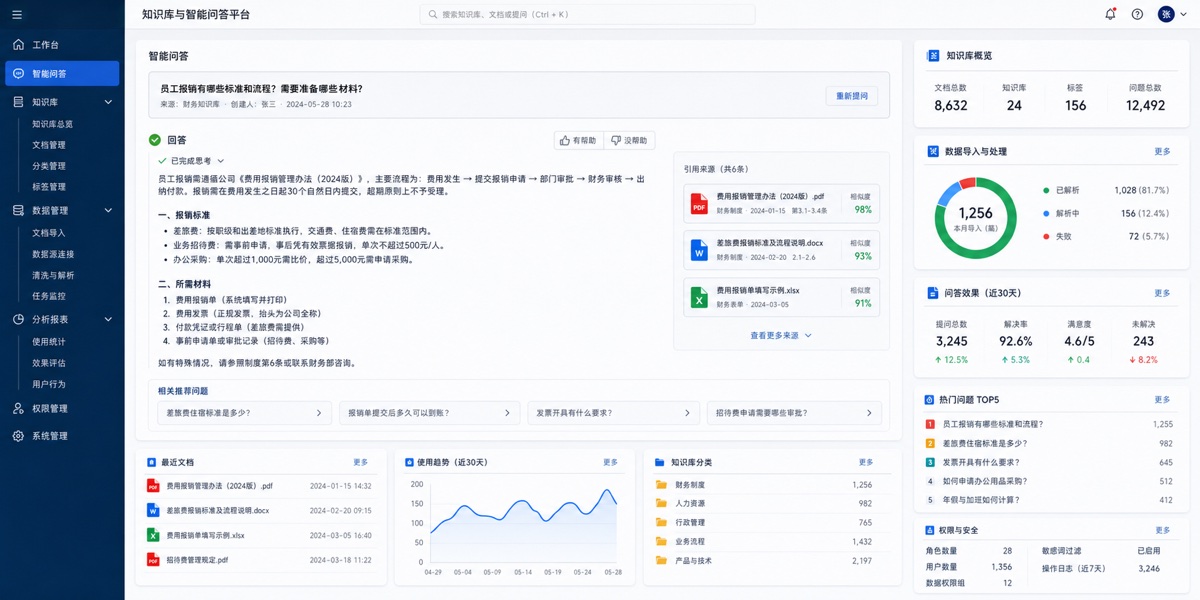
De-sensitization real cases: chaining of Ai's client service: Cases exist that illustrate knowledge, interfaces and manual collaboration; the scope of verification of specific clients, operational data and original records needs to be confirmed.

See what the cost of Custom AI Development is.

I'll answer your question first.

What circumstances would make it worth customizing an enterprise AI software?

When the difference is derived from exclusive business processes, knowledge rights, system actions or ongoing operating requirements, customization is of clear value. If the demand is for generic writing, summary or personal questions and answers, it is usually more reasonable to test the ready-made tool. First communication should first identify the user, the outcome of the mission and the consequences of the error, and then decide whether to make the prototype or the official software.

  1. Define an exclusive task
  2. Validation of key assumptions
  3. Delivery of operational applications
  4. Transfer and ongoing evaluation

The implementation boundaries and acceptances for this category of projects are described below.Look directly at the details.

Project decision-making conclusions

How should the Enterprise AI Custom Development be started?

The first issue is to select a closed loop that can be quantified, a real sample is available and error-ridden to verify key unknowns and complete the production project after adoption.

START WITH EVIDENCE

From preliminary judgement to acceptance and acceptance delivery

The level of uncertainty is reduced by stages before deciding on the scale of inputs and the modalities of cooperation.

Phase 1

Scene and scope diagnosis

Convert AI scenarios into verifiable tasks

Recovery of existing processes, volume of processing, manual baselines, knowledge data, system interfaces, error consequences and initial boundary.

Phase 2

PC and programme recognition

Validation of model effects and engineering conditions

Use of real task set comparison models, RAG, rules and tools to record quality, delay, cost and manual intervention.

Phase 3

Production customization development

Building online, governance-friendly software systems

The product interface, identity privileges, systems integration, log monitoring, abnormal retreats, testing deployment and continuous evaluation are completed.

CLIENT INPUTS

Recommendation pre-commencement readiness

Target users, business assignments and existing manual processesReal samples of normal, unusual, missing and high-riskBusiness knowledge, data sources and legal authorized boundariesSystems, API, account numbers and testing environments to connectRole rights, manual approvals and error disposal rulesPlanned budget, timing, deployment and security requirements
ACCEPTANCE EVIDENCE

Evidence to be seen in the acceptance.

The quality of the fixed real task set can be verified repeatedlySources, models, tips, rules and versions of knowledge are traceableSystem interface, tool call and data writing results are correctEffective mechanisms for authority, sensitive data, refusals, approval and auditModels are not available, interfaces are time-out and unusual tasks can be returned or transferredSource code, configuration, assessment collection, account number, deployment and transport information to take over
Boundary of cooperation and responsibility

Models API, reasoning algorithms, third-party software licences and cloud resources are usually presented separately by actual programme; clients are responsible for business rules, data authorizations, professional findings and high-risk action approvals. AI output is probabilities, with formal commitments, amounts, compliance and security-related decisions implicitly retaining manual confirmations.

Look at these four things before you choose the development team.

What really needs to be compared when businesses look for Custom AI Development services

The use of custom and artificial intelligence, the Enterprise AI Custale Development, the Custom AI Software, and the Enterprise AI application, are essentially looking for a team that can make proprietary business tasks into production software. The vendor should not be compared with a model demonstration, but rather check its ability to complete business diagnostics, real sample assessments, product development, systems development, access security, source delivery and continuous operations.

PROJECT TYPES

Four common categories of projects

The project will be defined in terms of the construction form, the scope of the first phase, the team configuration and the acceptance and acceptance modalities.

PROJECT INPUTS

Before consulting Enterpossess International, suggest that we prepare these eight messages.

There is no need to write a complete demand letter; how much is prepared. The more specific the information, the easier it is to judge whether it is to buy mature tools, do systems integration, or start custom development.

A business process prepared for priority adaptation and who is currently handling itRepresentative sample of normal, unusual, missing information and high-risk missionsList of documents, data, databases and existing systems to be usedUser roles, visible range, approval nodes and sensitive data boundariesThe format, the basis, and the actions that cannot be automatically executed for AI outputComparable baseline for current processing, time-consuming, back-work or errorInitial planned time, budget level, deployment and security requirementsSource code, configuration, assessment collection, account number, document and transport-wide interface requirements
DELIVERY PATH

Implementation and delivery pathways

Each stage has clear objectives, participatory roles and assessable outcomes, and important decisions are not left to the end of the project.

01Business diagnostics and mission baselines
02Data systems and risk assessment
03PoC and Real Sample Assessment
04Product and architecture design
05AI application custom and system application
06Production tests and greyscale upline
07Continuous assessment and operational optimization
FAQ

FAQs

The most common issues before cooperation are clearly stated in advance.

What services does the Custom AI Development usually include?+

The complete Custom AI Development usually includes scene diagnostics, task and sample preparation, PoC validation, product and architecture design, model and RAG or Agent development, operations systems integration, rights security, assessment testing, deployment on line and continuous operation.

How does the development of AI systems and ordinary software customization differ?+

In addition to product, front-end, data and interface engineering, AI custom development processes model selection, knowledge data, probability output assessment, manual takeover, call cost and version changes. The certainty business rules remain the responsibility of the normal software logic, and AI only assumes the elements that are appropriate for understanding, generating and supporting judgement.

What difference does it make between the purchase of common AI tools?+

Generic tools are suitable for standardized, low-risk missions; customized development will build exclusive applications around enterprise identity, knowledge, data, business rules, systems interfaces and acceptance indicators, and clarify source code, deployment and ongoing operational responsibilities.

Do you have to be a PoC first?+

When there are key unknowns in model effects, data quality, business rules or systems interfaces, the validation should be done with a real task PoC; if the capability is validated on the same data and the range is stable, direct access to the production design is possible, but a baseline for evaluation is still needed.

Could you add AI features to existing ERP, CRM or industry software?+

Yes. Usually, the primary data and privileges of the original system are maintained through independent AI services, API, news, model gateways or embedded modules, avoiding the overall reconstruction of the system to add AI.

What AI-specific assets will the project eventually deliver?+

In addition to the source code and deployment documents, models should be delivered with vendor configurations, tips and rules, knowledge processing, assessment of collections and results, tool interfaces, competency audits, operational monitoring and known limitations.

Could the Enterprise AI Custom Development contract be phased in?+

Yes. It is recommended that needs diagnostics or PoCs, production applications development, system connection and go-live, and continuous transport be separated into coverage and acceptance conditions.

Large model accounts have been purchased, and need to be customized?+

The ready-made tools are usually sufficient if only generic writing and personal questions and answers are available; application development, system integration and production governance are still needed if there is a need to connect business knowledge, competencies, client data, business processes or existing systems.

How can the enterprise AI project be avoided being locked in by model manufacturers?+

The model is not always available for cost-free replacement, but should be able to assess the impact of migration using the same task set.

DECISION FAQ

Common issues related to current projects

Check out all 265 questions.
Custom AI Development, AI app customization and construction of enterprise AI

What does Enterprise AI Custom Development usually contain?

The project scope should be defined around a closed operating loop. Ultimately, it should also be delivered with the source code, configuration, assessment, interface, deployment and maintenance.

View full answer
Custom AI Development, AI app customization and construction of enterprise AI

How much is the general value of the Enterprise AI Custom Development and what factors affect the price?

The price is not uniform by page number or model name only. The price is mainly subject to business tasks, sample and knowledge quality, model routes, system interfaces, role privileges, product terminals, deployment patterns, depth assessment, performance security and ongoing operations. It is recommended that diagnostics, PoC, production development and transport be estimated in stages. Any precise total price given without knowledge of the real task is used as a marketing reference.

View full answer
Custom AI Development, AI app customization and construction of enterprise AI

How should the Enterprise AI Custom Development project be accepted and accepted?

The Custom AI Development cannot only look at several successful demonstrations, but should also verify the AI effects, software engineering, business results and project assets. Use the frozen real task set to check the correct, wrong, rejected, ultra-abnormal and abnormal scenes; check interfaces, privileges, performance, logs, regressions and manual takeovers; recheck adoption rates, processing cycles, manual modifications and running costs.

View full answer
Custom AI Development, AI app customization and construction of enterprise AI

How should companies choose Custom AI Development?

First, the team can translate the AI vision into operational tasks, real samples, technical risks, and acceptance methods, rather than model names and demonstration effects. A qualified vendor should have both AI applications, software engineering, systems integration, data clearance, testing deployment and ongoing operations. It is required to explain the scope, failure sample, delivery of assets and up-line responsibility of a similar project.

View full answer
PROJECT DECISION PATH

Continue to judge in the context of current projects

The service boundaries, budget bases and modalities of implementation for different phases of the project are not identical and can be further assessed in conjunction with the following.

Additional relevant services and project guidance
Available information? View optional needs collation tool

Collapse requirements · Description of the knowledge tool. The tool is not needed to provide direct micro-credit; the summary is generated only in the browser and is not automatically submitted.

You want to use AI in your software or business processes?

The first goal and the current status need not be complete.