Home / Services / Customized software development, enterprise management systems and business platform development
PROFESSIONAL SERVICE

Custom Software Development

We design and build business software around your workflows, users and integration requirements. Services cover discovery, product design, architecture, development, testing, deployment and handover, whether you are launching a new system or replacing fragmented tools.

Web, mobile, SaaS and internal business systemsClear scope, milestones and acceptance criteriaAPI integration and legacy-system modernizationSource code, deployment and technical documentationProvide for the expansion of capacity for AI and follow-up operations

You do not need a complete requirements document for the first conversation. Tell us the business problem, your current systems and preferred timeline; we will help assess the scope, delivery approach and whether a PoC is appropriate.

Enterprise custom software covering Web Applet APP and management backstage
From your business.

Not just ERP and CRM. Proceed from your business system.

View complete service and delivery
How do you plan for the first software?

Take the client service platform as an example, let a process run first.

Clients submit requests – the person responsible for processing and auditing – and the client looks at progress and closes the case. The user is then judged whether to add an AI summary or a knowledge question and answer based on the system that already exists. The following is an example of scope, not a new client item.

There are real cases of dissensitization.

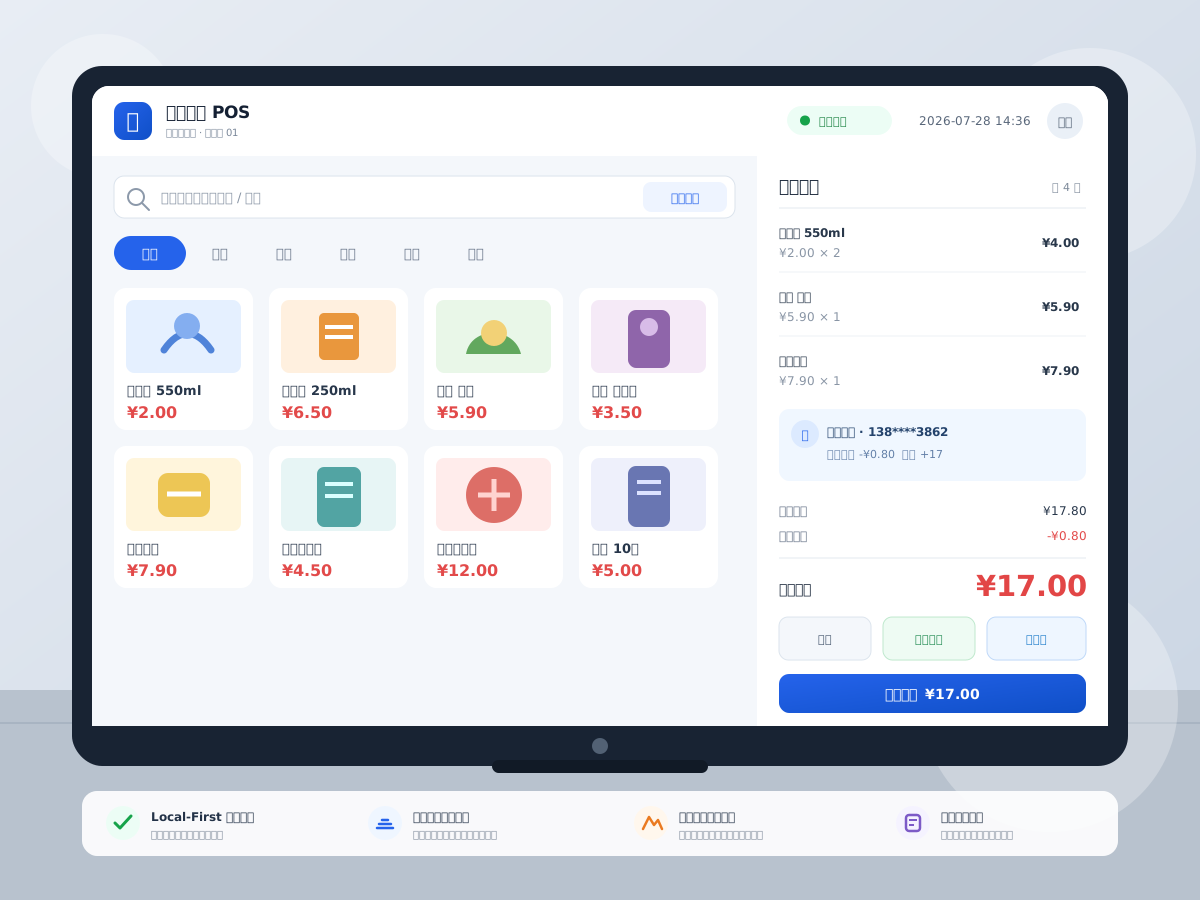
POS: about 120 stores are on line

Case descriptions of delivery experience with end-of-pipe, off-line trading, equipment fit and Headquarters data synchronization; reference to system connectivity and batch switching methods is not to be used to allow for direct replication of any system.

See implementation and verification instructions
The portal POS interface is indicative, and project evidence is based on case pages

Problems that enterprises usually face

Large gap between standard software and actual processes

Multiple tool-compelling, experience and data unharmonized

Early systems architecture limits business expansion

Historical codes and technical debt affect stability and iterative speed

Product demand complex, lack of complete design and research and development team

Our core services

01

Web management system, enterprise portal and business desk

02

Weights, public domain and open platform integration

03

iOS, Android and Trans-Range

04

Multi-tenant SaaS, industry platform and enterprise medium

05

Payment, finance, logistics, invoices and third-party API integration

06

Data platform, smart analysis and upgrade of existing software AI functionality

07

Reconstructing old systems, data migration and phased replacement

Project deliverables

The final delivery boundaries are defined according to the scope of services, the construction phase and the modalities of cooperation, and are described below as common results.

DELIVERABLEOperational requirements, prototypes and UI design specifications
DELIVERABLEApplication architecture, data models and interface specifications
DELIVERABLEBack and forth, move the source code and build the script
DELIVERABLEDatabase scripts, migration programmes and deployment documents
DELIVERABLEManual on test reports, acceptance materials, operations and transport

How the project budget is assessed

Service coverage and business closed loops that must be completed in the first phase: Web management system, enterprise portal and business desk, micro-infolio applet, public domain and open platform integration

Level of integrity of existing codes, data, systems, equipment and documents, and scope of coverage to be audited, relocated or re-engineered

Number of third-party interfaces, coordination responsibilities, data quality, unusual compensation and external supplier cooperation

Non-functional requirements such as performance, availability, security, authority, audit, compliance and access windows

Delivery depth and long-term responsibility: database scripts, migration programmes and deployment documents, test reports, acceptance and inspection materials, operational and transport manuals, and quality assurance, peacekeeping continuity ranges

These circumstances do not recommend immediate initiation of full development.

Standard products are already able to satisfy major processes, with only a small amount of configuration

No ongoing confirmation of needs and participation of business owners in acceptance and inspection

Demand is still a conceptual phase, but demands immediate and complete fixed total prices

IMPLEMENTATION PLAYBOOK

How enterprise custom software development moves from demand to acceptance results

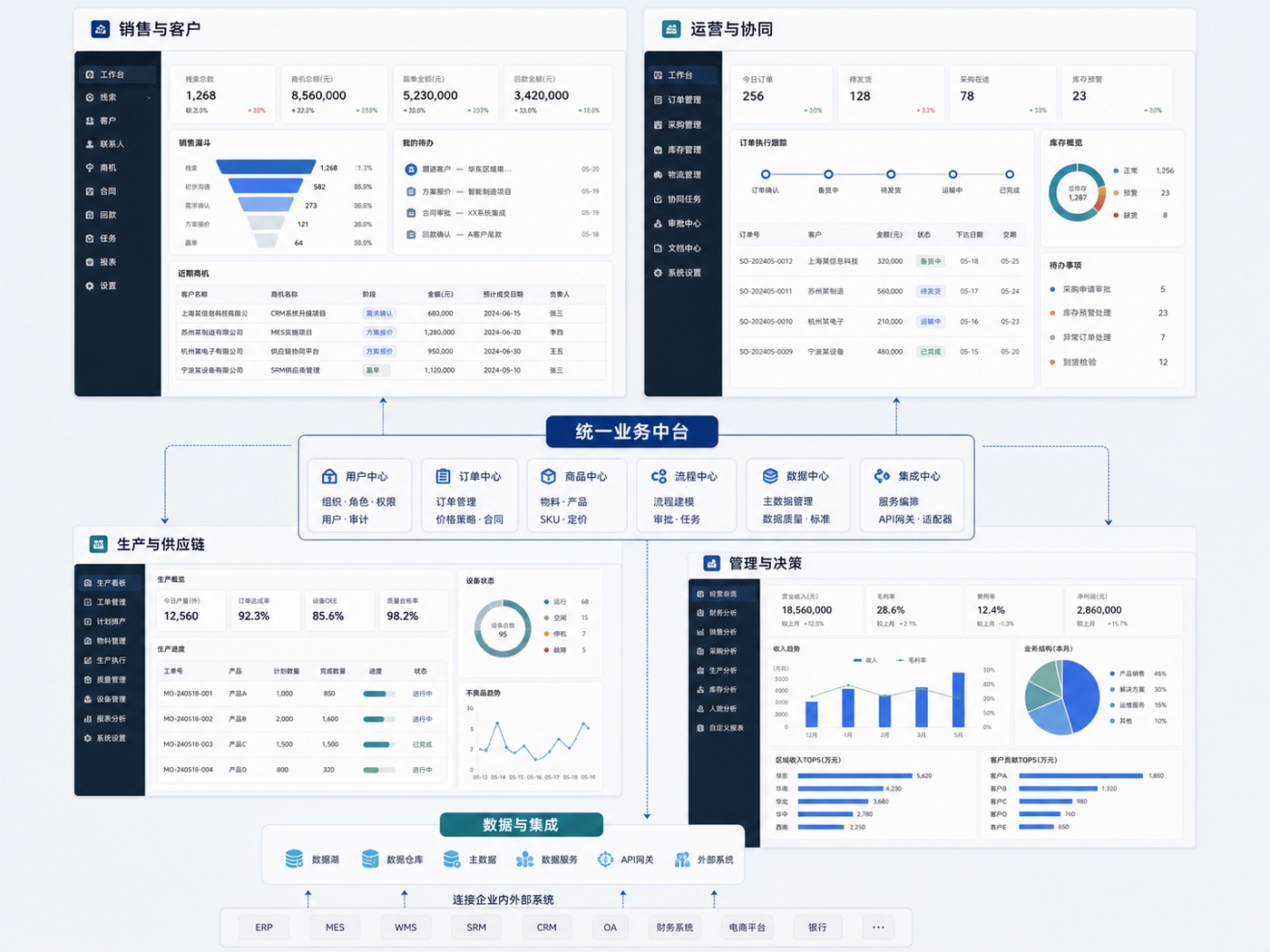
The following are used to explain the implementation methodology, the data calibre and the boundaries of responsibility, and are not used as a proxy for project judgement by functional lists.

Project scope and effectiveness confirmation

The formal scope, periodicity, budget and impact indicators are identified in the project ' s diagnostic, contract and acceptance baselines.

Project decision-making conclusions

How the enterprise custom software development should be launched

When key business processes have an enterprise identity, standard products require a large amount of compromise, or the software itself will become a long-term business capability, custom development is more valuable; procurement should be assessed first if mature products are configured to cover the main process. Formal input should be preceded by confirmation of core business closed loops, initial boundaries and measurable test-receivability standards.

START WITH EVIDENCE

From preliminary judgement to acceptance and acceptance delivery

The level of uncertainty is reduced by stages before deciding on the scale of inputs and the modalities of cooperation.

Phase 1

Blueprint and prototype

Let's get the roles, processes, rules and anomalies in the first place.

Identification of system boundaries through business interviews, process combing and interactive prototypes to reduce the deviations in understanding after entry into development.

Phase 2

MVP and Core Closed Ring

Prioritize delivery of first-run versions

Building data, privileges, interfaces and backstages around the most important user tasks, using real business data validation.

Phase 3

Go on and evolve

Expansion of capacity based on stable operations

The migration, training, monitoring and handover are completed, with the gradual addition of terminal, modular and AI capabilities based on the use of data.

CLIENT INPUTS

Recommendation pre-commencement readiness

User roles, existing processes and division of responsibilitiesOperational rules, exceptions and conditions for approvalAvailable data, systems and historical informationTerminal, equipment and third-party interface requirementsPerformance, safety, co-production and usability requirementsBusiness owners and operating mechanisms after the go-live
ACCEPTANCE EVIDENCE

Evidence to be seen in the acceptance.

Core business closed loops by sceneRole permissions and key operations are in line with the rules.Data migration, statistical calibration and interface consistencyPerformance, safety and abnormality are verifiedSource code, database and build process to take overDeployment, operation, interface and transport integrity
Boundary of cooperation and responsibility

Additional requirements, historical data cleansing, third-party system adaptation and external service costs should be identified separately; clients need to be held accountable for business rules, data legitimacy and final acceptance findings, avoiding leaving unrecognized business decisions to the development stage.

DELIVERY PATH

Implementation and delivery pathways

Each stage has clear objectives, participatory roles and assessable outcomes, and important decisions are not left to the end of the project.

01Operations and needs analysis
02Product prototype confirmed
03Structure and technical design
04The iterative R & D test
05Data migration and integration
06Upline acceptance and continuous overlap
FAQ

FAQs

The most common issues before cooperation are clearly stated in advance.

How do you choose to customize the development and purchase of standard software?+

Standard products are prioritized when processes are common, poorly differentiated and budget limited; key processes constitute competitive, complex integration or more customized when plans evolve over time.

Can you make the smallest version first?+

Yes. It is recommended that minimum feasible ranges and validation indicators be identified, that priority be given to the core closed loops, and that they be expanded on the basis of real use feedback.

Which terminals are supported?+

Web, Applet, H5, iOS, Android and management backstages can be made available on scene and the accounts, privileges, data and interfaces are unified.

Can we continue to develop the existing system?+

Codes, architecture, databases, deployments and security assessments can be undertaken before deciding whether to use the original system extensions, modular re-engineering, two-track migration or overall replacement.

Can the costs of APP, small programs and Web systems be directly compared?+

The numbering privileges, back-office management, payment interfaces, information, data migration, performance security and online clearances will affect the actual workload.

DECISION FAQ

Common issues related to current projects

Check out all 265 questions.
Contracts, payments, changes and project delivery

Who is the respective ownership of software copyright, source code and intellectual property rights?

The project should distinguish between the customer’s original information, customized results, supplier’s generic components, open source software and third-party commercial licences. The same concept is not true of source delivery, access rights, modification rights, copyright registrations and re-licensing rights.

View full answer
Applets, APPs, SaaS and old systems

Will source codes and documents be delivered when the software project is completed?

Project-based cooperation usually delivers source codes, but the specific scope must be specified in the contract. In addition to business codes, it is necessary to identify database scripts, configurations, build deployment documents, interface files, test materials and design assets.

View full answer
Software development and outsourcing of projects

How much does custom software development usually cost?

The customized software does not have a uniform price based on page size, and costs are determined mainly by scope, interface, data, authority, performance and accountability for delivery. The management system with the same name may be a single-sector tool or a connection to orders, inventory, finance and multi-organizational authority. It is recommended that the first business closed loop and receiving and inspection boundaries be established, and that the product, design, development, testing, deployment and maintenance workload be estimated. Any precise total price given without knowledge of the need be considered only as a marketing reference.

View full answer
Contracts, payments, changes and project delivery

What information is required for the software project acceptance and inspection?

The objective of the information is to demonstrate that the system meets agreed standards and that the client can continue to operate and take over.

View full answer
RELATED

Services, guidance and cases

Get your advice.
Mobile application budget

APP Customization development costs and cycles

Check for complete input from client, back-office, interface, build-up and ongoing operations

For more information.
Minor procedure budget

Micro-Intelligence Applet Development Costs

Dismantling project scope from business closed loops, micro-credit capability, backstage and clearance online

For more information.
Overall budget

Cost estimates for Custom Social Development

Establish a uniform quote baseline for functionality, technology, delivery and long-term responsibility

For more information.
Related Solutions

Electronic retail system

Building a system of interfacing business, order performance, membership rights, marketing activities and door stores, connecting online and offline channels and customer operations.

For more information.
Case scene

High-middle power producers trading system

The risk of dealings such as promotion peaks, duplicate requests, stock competition and third-party payments instability is illustrated by the ability of the members to compete with the compliance platform, as well as the means of receiving and receiving capacity validation, reconciliations such as typologies, surveillance alarms and failure recovery.

For more information.
Case scene

Trade City Applet for Retail Members

The interface between the customer and the door shop on the chained retail line is shown how micro-intelligence programs connect goods, billing, payment, door-to-door raising, crediting and membership, and clearly identify the boundaries of the delivery of micro-intelligence, unusual transactions, consistency of stocks and operational data.

For more information.
Available information? View optional needs collation tool

Collapse requirements · Description of the knowledge tool. The tool is not needed to provide direct micro-credit; the summary is generated only in the browser and is not automatically submitted.

What kind of software do you need for your business?

The first goal and the current status need not be complete.