
Applicable diagnosis
To determine if there's a need for more Agent.Analysis of tasks, competencies, context, teams and existing system boundaries.
When individual Agents are unable to maintain them after both retrieval, analysis, decision-making and system operations, multiple Agents can be split according to professional abilities, risks and system boundaries, and collaboration can be accomplished through clear agreements, sharing status, identity authority and manual clearance.
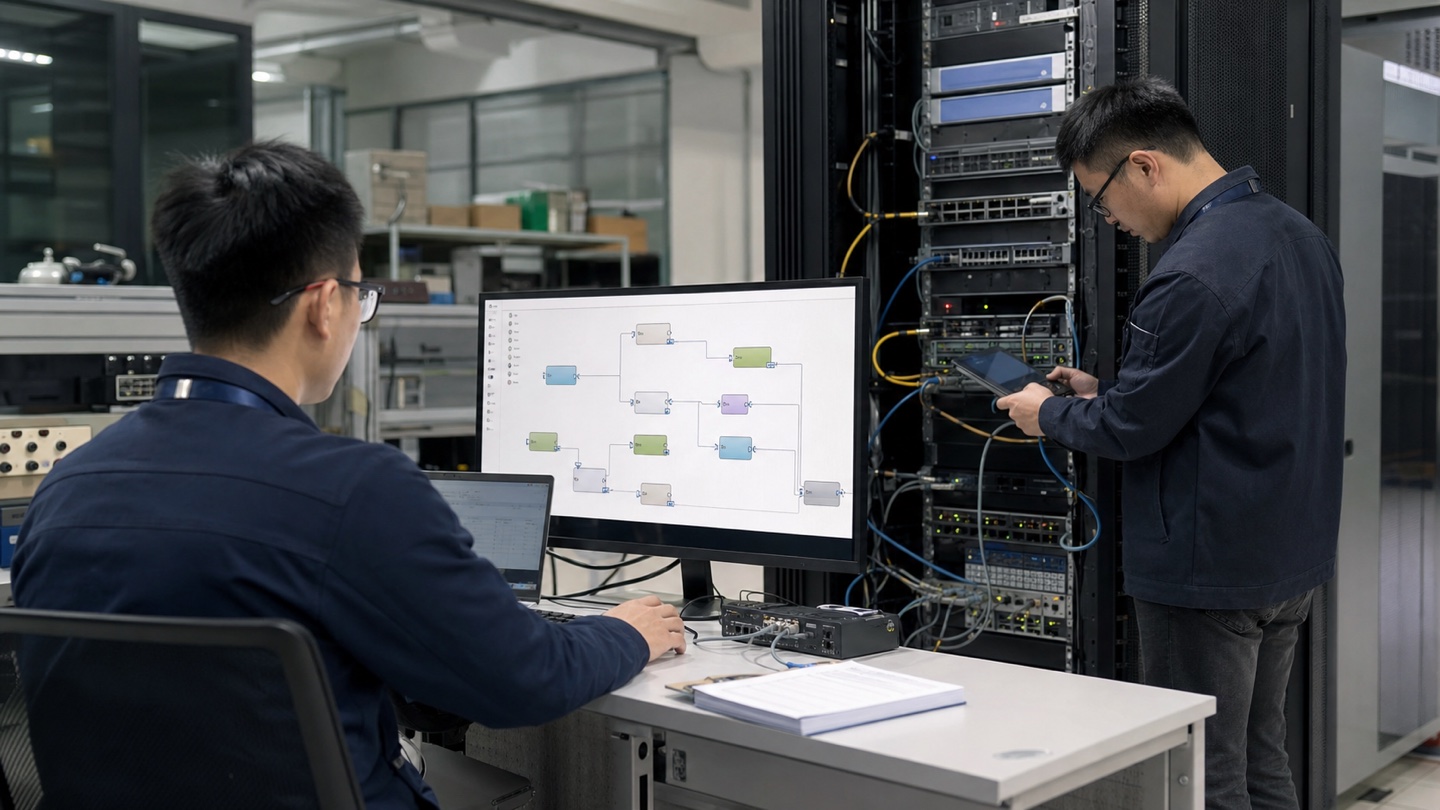
Use the single Agent to complete the task. If the hints, tools, privileges and context are difficult to maintain or different capabilities are placed under different teams and platforms, then the coordinating and professional Agents must be decomposed. Each Agent must have clear input, output, authority, timeout and failure responsibilities.
The level of uncertainty is reduced by stages before deciding on the scale of inputs and the modalities of cooperation.
Analysis of tasks, competencies, context, teams and existing system boundaries.
Select two to three professional Agent test findings, assignments, collaboration, failures and manual takeovers.
Identification, auditing, tracking, version, cost, issuance and retreat.
The multiple Agents do not automatically improve accuracy rates, nor should they hide unclear business tasks by increasing the number of Agents. Inter-organizational Agent collaboration requires corporate identification, data and business delegation.
Agent's a single one. It's complicated, it's difficult to locate and it's too much.
Multiple Agents repeat building knowledge and tools and collaborate rely on custom glue codes
Lack of uniform rules on assignment, status, failure recovery and ultimate liability
The sensitive message between Agent and the lack of identity and trust borders
Disaggregation of single and multi-Agent applicability assessment and responsibility
Coordinater, Professional Agent, taskchart and shared status design
MCP tool access, A2A capability discovery, in collaboration with Agent
Context engineering, memory isolation, compression and as-needed retrieval
Agent identity, minimum rights, message signature, clearance and operational audit
Task completion, assignment, conflict, cycle, time overrun and cost assessment
Agent catalogue, version, tracking, monitoring and failure retreat
The service boundaries, budget bases and modalities of implementation for different phases of the project are not identical and can be further assessed in conjunction with the following.
The final delivery boundaries are defined according to the scope of services, the construction phase and the modalities of cooperation, and are described below as common results.
Service coverage and business closed loops that must be completed in the first phase: single Agent and multiAgent applicability assessment and responsibility split, coordinator, professional Agent, task map and shared status design
Level of integrity of existing codes, data, systems, equipment and documents, and scope of coverage to be audited, relocated or re-engineered
Number of third-party interfaces, coordination responsibilities, data quality, unusual compensation and external supplier cooperation
Non-functional requirements such as performance, availability, security, authority, audit, compliance and access windows
Delivery depth and long-term responsibility: collaborative task set, performance cost and security assessment reports, deployment, monitoring, operation and handover of information, and quality assurance, peacekeeping continuity range
Project objectives, responsible persons and acceptance criteria are not established
Key accounts, data, interfaces or business authorizations not available
Only the maximum price or very short cycle is sought, and the necessary tests and quality control are not accepted
The following are used to explain the implementation methodology, the data calibre and the boundaries of responsibility, and are not used as a proxy for project judgement by functional lists.
At the start of the project, one of the most in need of improvement is selected, the actual user is interviewed and a recent sample is drawn. The processing volume, average time-consuming, waiting time, back-to-work, unusual number and manual contact points are recorded around “Single Agent and MultiAgent Applicable Assessment and Responsibility” and, if available data are incomplete, the basis is to be used as a manual desk account for one to two weeks in a row. Without a baseline, the interface can only be evaluated for completion after the project is completed and it is not possible to judge whether the multi-intellectual system is structured with Agent for sustainable business change.
The baseline should also indicate the scope of the statistics and exclusions. For example, processing time begins with the availability of information or with the first submission by the client, the exception fails to include third-party interfaces, and manual modifications are minor proofreading or re-processing.
The first phase does not seek to cover all sectors, but rather forms a closed loop around “coordinaters, professional Agent, task maps and shared status designs” that can operate in real terms: clear input, rules of handling, system actions, responsible roles, unusual movement and final output. Key roles include at least business owners, actual users, technical interfaces and acceptance managers, avoiding demand being described by management and being used on the Internet only by another group.
The need assessment corresponds each competency to the business scene, user role and sample acceptance. Matters that do not provide legitimate data, interfaces or decision makers should be included as a pre-condition or subsequent stage, and should not be included quietly in a fixed-range offer.
A typical path is to analyse the tasks and existing Agent, confirm single or multiple Agent routes, design responsibility protocols and status, and small-scale PoC. Each stage should result in visible results such as flow charts, prototypes, interface contracts, test records, deployment statements or running demonstrations.
The stage demonstration is not “looks fit to work”. A representative sample should be used to cover normal processes, missing fields, repeat requests, inadequate authority, time overruns and historical data anomalies from external services, and to identify problems that arise only in the production environment at an early stage.
The project should at least reconcile the Agent role, competency and responsibility boundary maps, multi-intelligence architecture, mission protocols and status models, a coordinator, professional Agent, MCP/A2A interface source code, and confirm source or configuration attribution, account management, build deployment, data backup, fail response and subsequent maintenance responsibilities. In addition to functional acceptance, check privileges, security, performance, logs, recoverability and key user training to ensure that client teams are able to use and understand system boundaries independently.
Assuming a process baseline of 800 items per month, an average of 18 minutes per unit, and a return rate of 12 per cent, this is only an example, not a client's performance. A line should be followed by a continuous four to eight weeks of continuous observation at the same calibre, before judging whether the Agent function is achieved, with more clarity, complexity of tasks measured in sequence, and greater ability to re-live across platforms.
This page contains organizational content around real service issues such as multi-intelligence system development, multi-ent collaboration, Multi-Agent development, and Agent programming platform. Keywords are used to help users and search systems identify themes, without implying a commitment to fixed effects; final scope, cycle, budget and indicators are based on project diagnosis, contract and acceptance baselines.
Each stage has clear objectives, participatory roles and assessable outcomes, and important decisions are not left to the end of the project.
The most common issues before cooperation are clearly stated in advance.
No. A single Agent with clear tools to stabilize tasks should be kept simple; multi-smart bodies are valuable only if responsibilities, competencies, context or team boundaries do need to be split.
MCP is mainly linked to Agent and tools, data and resources; A2A is used for discovery, task exchange and collaboration between Agent. The two can be combined, but they cannot be a substitute for the bottom-up privileges and operational interface.
In addition to the final results, check the task split, Agent selection, information and status, permission, loop termination, failure recovery, manual takeover, delay and total cost.
MCP addresses mainly how Agent connects tools, data and context in a standard way; A2A addresses primarily how capacity is found, tasks are passed and collaborates between independent Agents. The two can be combined and cannot replace the enterprise’s own identity, mandate, audit and operational validation. Most projects should first stabilize the single Agent’s connection to the MCP tool, and then introduce A2A only when there is a real cross-Agent responsibility.
View full answerAI Digital Employees, Multi-Intelligence, Security and Enterprise Intelligence SearchA single Agent can perform tasks with clear authority and stability in context. Multi-intellectual systems can only bring value if the task cuts across clearly different duties, knowledge domains, subject of authority or team boundaries, and requires independent assessment and collaboration agreements. Adding Agent numbers also increases state, cycle, delay, cost and security complexity, and therefore the incremental gain must be demonstrated by the real task.
View full answerAI Smart Worksheets, Co-Associate, Research and Development Effectiveness and Application SafetyThe robot cannot be automatically equipped with company-wide data because it is installed within the enterprise. The synergetic platform should be mapped to the business system account, with permission to check by organization, role, business object, field and action; there should be a separate range for group chat content, external contact information and sensitive files.
View full answerAI Smart Worksheets, Co-Associate, Research and Development Effectiveness and Application SafetyAI is suitable for identifying duplicate defects, hazard calls, missing tests, normative issues and change impact leads, and for the reviewers; but structure trade-offs, business rules, boundaries of authority and hidden needs still require responsibility from those familiar with the system. The more reasonable objective is to have AI undertake the first round of inspections, and to focus manually on high-risk judgements.
View full answerEstimated inputs by Agent, tasks, protocols, tools, competencies, assessments and operations
For more information.Tool integrationProvision of controlled, auditable enterprise tools and data interfaces for Agent
For more information.Thematic centresUnderstanding the overall structure of job assignments, the division of labour between Agent and operational responsibilities
For more information.