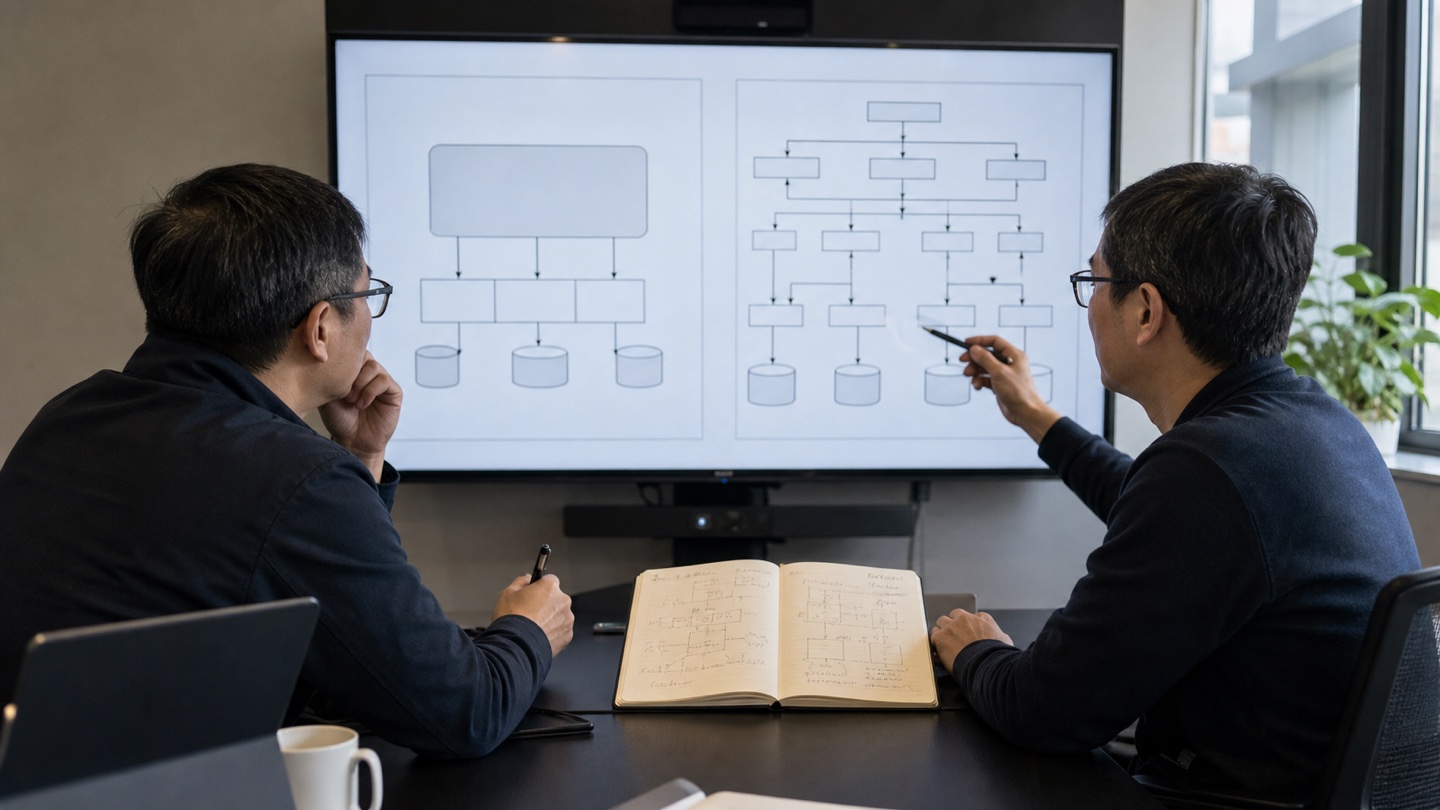
Let's get a clear line between the two agreements and the problem.
MCP uses client and server structures to expose templates of tools, resources and tips to allow AI applications to discover and call capacity in a uniform manner. For example, query orders, read knowledge base, create worksheets or access database structures.
A2A addresses the interoperability between independent intelligents, supporting capability discovery, mission status, information, product, fluid response, and long mission notification. It is concerned with “how different Agent understands each other's abilities, assigns tasks and exchanges results.” The two can be used in tandem and not as substitutes for each other.
- Agent to Tools, API and Resources: Prioritizing MCP
- Cross-team or cross-platform collaboration between Agent and Agent: consideration of A2A
- Simple internal calls: existing API and messaging mechanisms may be sufficient
- The protocol only addresses the connection criteria and does not automatically resolve business syntax and quality
Enterprise integration should not bypass existing API and integrated governance
When an API gateway, service bus, master data, access platforms and auditing systems already exist in an enterprise, the MCP server should build on these capabilities, rather than simply stripping the database or core system to models. The protocol adapts to transform existing services into a description of tools that Agent can understand, while retaining original rights, limit flow and audit.
For legacy systems that do not stabilize API, interface modifications, read-only data services or controlled automation programmes should be evaluated first. Agent ' s direct simulation manual clicks, although quickly validated, are usually less stable, auditable and less costly in the long term.
The quality of tool design determines whether Agent is reliable
Tool names, descriptions, input structures and returns affect model selection. A large “operating order” tool tends to be blurred, and more securely, by disaggregating the ability to search for orders, create drafts, validate inventories, submit approvals, etc., and design clear confirmations for high-risk operations.
Return content should be structured as much as possible, including state, error code, traceable ID and the necessary basis. The tool must have mechanisms for compensation for failure, including thiomers, time overruns, retours, stop-flows and failures, and avoid the repetition of orders, repeated notifications or data contamination caused by Agent's repeated calls.
- A tool only carries clear and descriptive business actions
- Enter parameters using strict Schema and business validation
- Segregation of queries and writing, high risk writing, increased approval
- Return results are also used for model judgement and manual checking
Authorization must bind target resources and follow minimum authority
Access to the tokens requires verification of the issuer, audience, validity period and permission, and cannot pass the upstream token directly to the downstream system without verification, or cover all users and tools with a long-term key.
The public directory only exposes the information necessary to access the extended card, which contains internal skills, addresses or sensitive capabilities. Cross-organizational collaboration also requires clear data transmission, preservation and liability boundaries.
MultiAgent requires catalogue, organization and full chain to observe
When the number of Agent increases, the enterprise needs to maintain a directory of capabilities, versions, managers, operational status and dependency.
Each cross-Agent mission should use a single tracking ID to record mission status, messages, tool calls, products, costs and time. Otherwise, when the end result is wrong, it is difficult to judge whether the problem comes from models, tools, networks, privileges, rules of operation or another Agent.
Recommended order of application: first tool, then collaborative
Most enterprises do not need to build complex multi-Agent networks from day one. A more rational sequence is to combo high-value business capabilities and create controlled tools using standard API or MCP; create single Agent workflows and assessments; and introduce A2A when responsibilities do require assignment across systems, teams or suppliers.
The final acceptance should focus on mission success, validity of authority, traceability, failure recovery and business returns, rather than on how many agreements were entered or how many Agents were created.
Change MCP from reading findings to project input
The most likely problem after reading methodological articles is the acceptance of principles, which are not translated into the next step. It is proposed that the head of operations organize a 60-90-minute mini-workshop, choosing only one real process and not rushing to discuss the full platform.
Step 1: Establishment of a current status and sample baseline
Draws up recent normal, unusual and border tasks around “detailing what the two agreements address separately” and records monthly processing, waiting times, actual processing time, back-to-work rates, manual contact points, error consequences and current tools.
Step 2: Clarifying the initial closure and inaction
The first phase should be designed to allow a chain to run and be retraceable, rather than stacking all Model Context Products, A2A, Agent2Agent into the same version.
Step 3: Match technical results to engineering evidence
The structure determines the tracking relationship between the demand number, sample number, test result and version around “tool design quality”. The structure determines the amount of capacity, peaks, availability, recovery time, frequency of release and failure data to avoid introducing complexity that exceeds the team capacity too early for technical advances.
Step 4: Receiving, inspection and disking with the same calibre
Assuming that the original process handles 600 tasks per month, an average of 20 minutes and a return rate of 10 per cent, the target can be stated as “six weeks after the start of the line, with an average reduction of 25 per cent in time, and a return rate of no higher than the original baseline, given the close complexity of the task.” This set only demonstrates the measurement method, and does not represent any client outcome; formal indicators must be identified by the enterprise on the basis of its own sample.
- Operational material: flowchart, role, sample mission, current issues and baseline data
- Technical material: system inventory, interface, data access, deployment environment and security requirements
- Project material: first-phase scope, exclusions, liability matrix, milestones and change mechanisms
- Receiving and inspection material: test set, execution records, list of deficiencies, indicator queries and handover documents
When these materials are identified jointly by both the operational and technical parties, the method in the article is actually entered into the project. If key data, interface authorization or the responsible person are not in place, the logical next step is usually a limited diagnostic or PoC, rather than an immediate commitment to complete the work period and fixed total price.
Official reference
- Model Context Protocol:Architecture OverviewMCP Official Document.
- Model Context Protocol:AuthorizationMCP Code - 2025-11-25
- A2A Protocol v1.0 and protocol descriptionA2A Project · 2026
- A2A Protocol SpecificationA2A Project. Update on an ongoing basis
Implement methodology to project action
- MCP addresses Agent ' s tool connection, A2A ' s independent Agent collaboration
- The protocol is not to bypass the API, the authority and auditing system of the enterprise
- The tool is small and clear, and the writing operation must be manageable and reversible.
- Finish the single Agent business closed and expand the multiple Agents according to real needs.
Continuing to reconcile common issues in project decision-making
How do third party API integrated and multi-system interface development generally offer?
The interface project cannot simply be quoted by the number of interfaces, as the same interface may be simply a query, but may also assume transaction, retest, reconciliation and security responsibility. The cost depends on the quality of the document, the test environment, field conversion, synchronization frequency, unusual compensation, performance and online support. It is recommended that the number of URLs be assessed by business links rather than counting only. The unknown interface can be technically validated and then formally quoted.
View full answerCorporate information selection, integration and data governanceCan the API interface be fully compatible without a file?
Sometimes, but costs, risks and time increase significantly, and no certain connection can be promised. Teams need to confirm whether there is a legal mandate, test environment, logs, sample requests and original support.
View full answerCorporate information selection, integration and data governanceHow do you monitor interface failure and data discrepancies after systems integration?
The interface returns successfully and does not amount to a business process completion, and systems integration must monitor both the technical state and the results of the operation. Each request must have a unique tracking number, recording the source, target, state, time-consuming, retry, and business unit number. Payments, orders, inventory, etc., are also regularly reconciled. Aberrants must be entered into a retried, reimbursable or manual processing queue and not remain in the log.
View full answerContracts, payments, changes and project deliveryWhat information is required for the software project acceptance and inspection?
The objective of the information is to demonstrate that the system meets agreed standards and that the client can continue to operate and take over.
View full answerNeed for further analysis in the context of the current state of the enterprise?
We provide IT technical advice, enterprise information construction, Software Project Outlook, product design, R & D delivery and systems delivery services.