
Mission and sample diagnosis
Confirms whether the generation task is worth developingIdentify users, inputs, expected results, basis for references, consequences of errors, manual processes and current processing costs.
It has been determined that AI is to be used, but it is not clear whether to use RAG, tools or fine-tuning? This page describes the technical options for large model applications from mission and data perspectives.
It is not necessary to prepare a complete request for assistance.
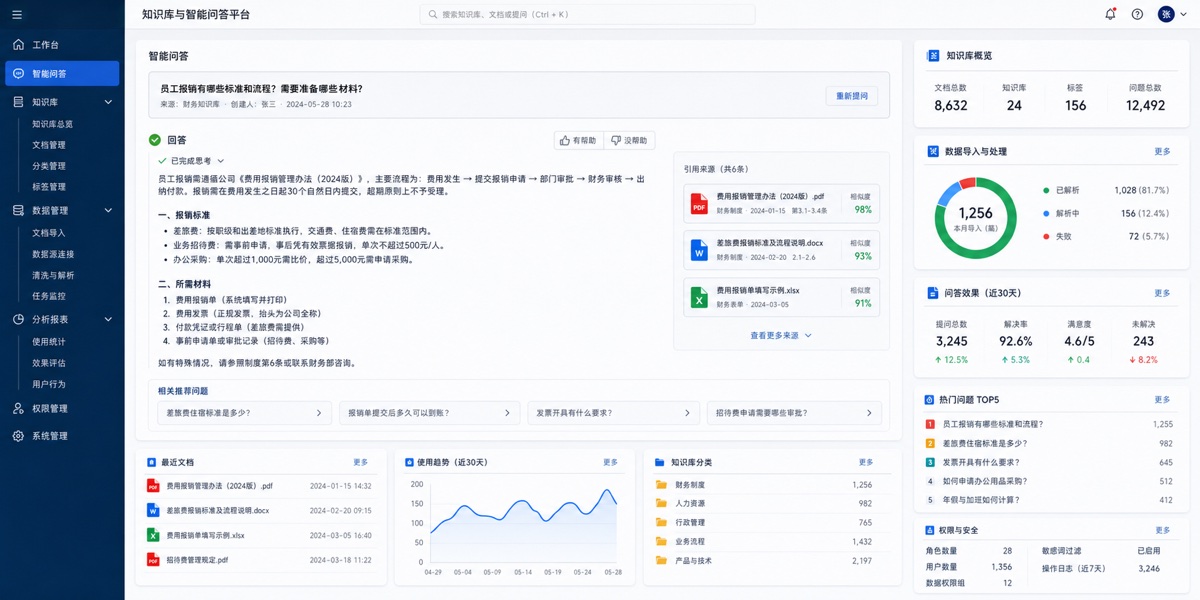
The selection of models must take into account the quality of answers, the scope of the authorization, the conditions of deployment, the delay and the cost of running. Knowledge is constantly updated and focuses on assessing the search, and on prioritizing the definition of the interface of the controlled tool when searching or executing the action.
The implementation boundaries and acceptances for this category of projects are described below.Look directly at the details.
The generation AI application should start with an output-detectable, sample-available, and error-based task force. First, a manual baseline and fixed task set is created, comparing models, RAGs, rules and structured outputs; and after the PoC has reached the quality and cost threshold, identity privileges, business interfaces, clearance processes, log monitoring and continuous evaluation are built.
The level of uncertainty is reduced by stages before deciding on the scale of inputs and the modalities of cooperation.
Identify users, inputs, expected results, basis for references, consequences of errors, manual processes and current processing costs.
More direct generation, RAG, rules, tools call and manual review, recording quality, delay, cost and serious errors.
Product interfaces, access, interfaces, monitoring, abnormal retreats, deployments and versionization regression assessments are completed.
The generation AI output is probabilistic, with high-risk conclusions, formal commitments, amounts, contracts and the release of default retention manual confirmations. Model API, reasoning algorithms, third-party data and commercial component costs are presented by actual programme; the client is responsible for data legitimacy, business rules and professional findings.
The business search for large model applications development, generation development or AI application development, usually has knowledge questions and answers, document processing, content generation, data analysis or business assistant requirements. Production projects also require user access, back-office management, knowledge and data conduits, privileges, evaluation, monitoring, model switching and manual review, and cannot equate an API call with a full application.
A quantifiable task is first identified around knowledge questions and answers, document understanding, content aids, data analysis or tools, rather than building a common portal.
The preparation of real tasks, input and output samples, sources of knowledge, updated responsibilities, role privileges and sensitive boundaries that cannot be assigned to models is required.
Complete identification, interface, logs, assessment, cache, flow limit, manual take-over, greyscale release and downgrade paths when models are not available.
Continuous management of model versions, tips, knowledge, assessment and collection, call costs, third-party interfaces and user feedback to avoid slow deterioration of quality after going online.
Generic models generate content without knowledge of business rules and up-to-date business data
The output seems to be flowing without any basis, and errors and omissions cannot be stabilized.
Models, knowledge, tips and system interfaces are scattered across multiple tools
Operators need to copy and paste repeatedly, and AI is not entering the formal process
Demonstrations are available, but production environments lack access, logs, monitoring and retreat
Generating AI business scenario diagnostics and first mission design
Large-language models, tips, structured outputs and model path development
RAG Knowledge Retrieving, referencing, Permission Filtering and Upgrading of Water Flow Lines
Documents generation, information extraction, summary, validation and content workstation
AI Agent Tool Call, Business Rules and Manual Approvals
ERP, CRM, OA, database and third-party content service integration
Sensitive data processing, alerting protection, auditing and abnormal retreat
Real task assessment, greyscale upline, cost monitoring and continuous optimization
The service boundaries, budget bases and modalities of implementation for different phases of the project are not identical and can be further assessed in conjunction with the following.
The final delivery boundaries are defined according to the scope of services, the construction phase and the modalities of cooperation, and are described below as common results.
Service coverage and business closed loops that must be completed in the first phase: generation AI business scenario diagnostics and first mission design, large language models, tips, structured outputs and model route development
Level of integrity of existing codes, data, systems, equipment and documents, and scope of coverage to be audited, relocated or re-engineered
Number of third-party interfaces, coordination responsibilities, data quality, unusual compensation and external supplier cooperation
Non-functional requirements such as performance, availability, security, authority, audit, compliance and access windows
Delivery depth and long-term responsibility: fixed assessment and assessment, quality reporting, performance costs and safety testing, deployment rollback, operational monitoring and knowledge transfer files, and quality assurance, peacekeeping continuity ranges
Project objectives, responsible persons and acceptance criteria are not established
Key accounts, data, interfaces or business authorizations not available
Only the maximum price or very short cycle is sought, and the necessary tests and quality control are not accepted
We can help check the first certification range.
The hint and structured output are suitable for a mission-specific context at one time; the RAG addresses the search, version and reference of external knowledge; the tool calls for real-time queries and controlled actions; the fine-tuning is required to determine whether there is sufficient benefit after the mission, sample and assessment have stabilized. The four can combine, but cannot replace real-time data queries with fine-tuned or use the search results as an order for which execution has been authorized.
In the case of questions and answers to questions, the system is not only a question of the system being broken, the competence of different departments, conflicting information and unfounded questions.
The model can recommend searching for orders or creating drafts, but identification, search conditions, monetary limits and eventual execution are verified by the business interface. The documents and retrievals uploaded by the client are data only and cannot be changed by themselves.
A mission may involve multiple searches, model calls, retesting and manual review. The medium and high-level points of the end-to-end delay, the resource costs per mission, the time-out rate and the manual take-over rate.
The following is a recommended assessment of the performance of the customer, not of the customer, nor of the uniform commitment to meet the standard.
| Checkpoint | How do you check it? | Avoid miscalculation. |
|---|---|---|
| Based on the support rate | Manual check for conclusion supported by reference | The existence of a reference does not mean that the reference to the answer supports it |
| Border processing | Ungrounded, ultra vires and conflict data tested separately | The rejection of correct responses and the operational completion of the accounts are counted separately |
| End to End | From task submission to user-available results | Include search, tools, retest, not just the first word of the model |
Capability scenario: contract document review desk: The combination of techniques used to understand generation, citation and review is not used as proof of completion of client projects or accuracy rates.
Each stage has clear objectives, participatory roles and assessable outcomes, and important decisions are not left to the end of the project.
The most common issues before cooperation are clearly stated in advance.
No. Model API is a basic capability and production applications require scope of tasks, knowledge data, structured output, identity privileges, system interfaces, manual clearance, log monitoring, evaluation and abnormal retreat.
Many enterprises validate values using controlled cloud-end models before assessing mixed or privatized routes.
The need to use both real mission assessments, RG references, operating rules, structured validation, refusals, manual approvals and the return of versions cannot be justified by mere promise of a hint.
The application of source code, model configuration, alert rules, knowledge processing, assessment collection, interface and deployment information can be delivered within the scope of the contract, and the permitted boundaries of third-party models and components can be identified.
The normal software processes input and returns predictable results mainly according to the established rules, and AI applications also face problems of unstable model output, changes in knowledge versions, data quality and manual review. Both require demand, product, back-end, interface, testing, deployment and mobility, and AI does not replace software engineering. Reliable AI Application Development is the addition of mission assessment, reference basis, authority fence, manual takeover, model cost and ongoing operation based on generic software engineering.
View full answerAI Application Development and Enterprise AI Software ConstructionThe data should indicate the source, permission, time version and correct results, while the interface should confirm the documentation, test environment, authentication, flow restriction and writing responsibilities. When information is incomplete, it can be diagnosed and small-scale PoC, while identifying gaps that must be filled before production is developed.
View full answerAI Application Development and Enterprise AI Software ConstructionMost enterprises should use mature models to match their certification tasks with tips, rules, RAGnowledge case and tools. They should only assess fine-tuning when fixed missions have stable capacity gaps, legitimate quality training data and clear benefits.
View full answerAI Application Development and Enterprise AI Software ConstructionThe access is determined by the user, frequency of use, equipment capability, identity privileges and business processes, rather than by seeking a form of one-time coverage of all terminals. The internal job assistant is usually suitable for embedding in existing systems or enterprise micro-intelligence, nails, flybooks, customer service using web pages, public numbers or small programs, and field missions may require the APP’s photo, positioning, offline and equipment capabilities.
View full answerSee how large models can assist in engineering constraints, manual evaluation and development processes
For more information.Questions and answersUnderstanding code review, testing, security, clearance and liability boundaries
For more information.General service entranceFull range from business landscape, AI capability, software products to production operations
For more information.Knowledge capacityBuilding knowledge retrieval capacity that can be quoted, updated and inherited from business competencies
For more information.Typical sceneConnect extraction, generation, audit, quotation and manual confirmation to business closed loop
For more information.Quality governanceControl production quality with fixed task sets, error ratings and versions
For more information.Indicate product patterns, real tasks, available data and deployment requirements, first determining whether RAG, tool adaptation, model suitability or full software development is required.
The first contact is not to send passwords or unsensitive sensitive information.