Home / Services / Project operations, contracts, hours worked and customized development of the cost management system
PROFESSIONAL SERVICE

Project Contract Operation Management System

The first period should run around a genuine contract to the close of business from the creation to the closing of a project.

Contract, delivery and business unity are visibleProject costs are more timely to reconcile with MāoriMilestones, billing and refunds closed.Delayed overexpenditure and earlier warning of change in scope
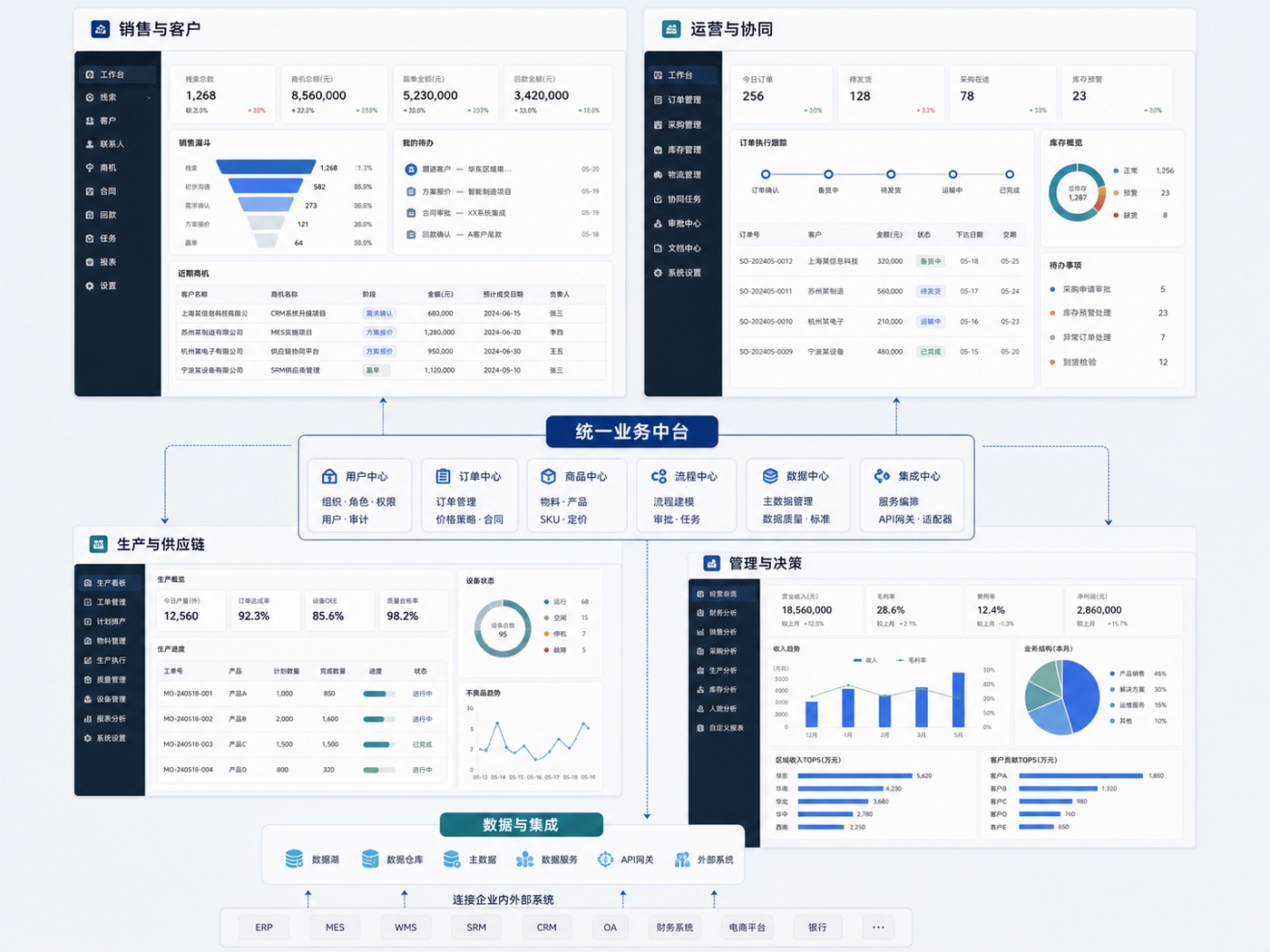
Integrated operating platform for the payment of time-cost reimbursement for project contracts
Project decision-making conclusions

How the project operations and contract management system should be launched

The project operations and contract management system should start with a genuine business chain, with the recognition of business responsibilities, data ownership, existing systems and quantifiable baselines, and a decision to adopt mature products, configuration implementation, secondary development, independent customization or systems integration. The first phase will be closed-ring validation with representative normal and unusual samples, with organizational and functional scope expanded once adopted.

START WITH EVIDENCE

From preliminary judgement to acceptance and acceptance delivery

The level of uncertainty is reduced by stages before deciding on the scale of inputs and the modalities of cooperation.

Phase 1

Current situation diagnosis

Clarifying first-stage issues, business closed loops and data responsibilities

Interviews with actual positions, sorting of clients, business opportunities, offers, contract and project development synergies, WBS, milestones, tasks, resources, working hours and delivery management-related processes, samples, systems and risks.

Phase 2

First implementation

Run a closed receiving ring with real business.

Complete project budget, procurement, cost, outsourcing and cost aggregation, change, risk, issues, acceptance and closure management, and synchronize the establishment of the necessary authority, interface, migration and anomaly mechanisms.

Phase 3

Online.

Decision to promote through reconciliation, adoption rate and operational indicators

The batching of real users and data, and the observation of quality, efficiency, anomalies and maintenance costs, form a follow-up route.

CLIENT INPUTS

Recommendation pre-commencement readiness

Contract template, project type, settlement modalities and representational itemsStatistics on hours of work, costs, procurement, billing and refundsCurrent processes, job roles and major anomaliesSystems, interfaces, account numbers and data accountability statements are in placeHistorical data size, quality and migration retention requirementsGo-live windows, key users and acceptances
ACCEPTANCE EVIDENCE

Evidence to be seen in the acceptance.

Budget, actual costs, income and refunds can be traced back to projects and contractsChange, milestone, acceptance and closure status flowed in accordance with the rulesKey business closed loops can be tested over and over again with real samplesRole rights, approval, logs and data range are agreedRepeated interfaces, timeout, failure and compensation process traceableSource code, configuration, deployment, testing and transport information can be taken over
Boundary of cooperation and responsibility

The client is responsible for confirming the operating system, data legitimacy, financial or trade expertise and providing the necessary account numbers, samples and internal managers; third-party product licences, cloud resources, external interfaces and specialized compliance costs are identified separately.

Problems that enterprises usually face

Disconnected contract scope, project plan and delivery

Manual consolidation of hours worked, procurement, travel and outsourcing costs at the end of the month

Billing and refunds after the completion of the milestone remain dependent on manual catalytic support

Management was unable to identify extension, over-expenditure and low-māori projects in a timely manner

Our core services

01

Clients, business opportunities, quotations, contract and project formulation

02

WBS, milestones, tasks, resources, working hours and deliverables management

03

Project budget, procurement, costs, outsourcing and cost aggregation

04

Change, risk, issues, acceptance and closure management

05

Billing plans, recoverables, revenue recognition and business analysis

06

CRM, OA, finance, invoices, electronic signature and collaboration tool integration

PROJECT DECISION PATH

Continue to judge in the context of current projects

The service boundaries, budget bases and modalities of implementation for different phases of the project are not identical and can be further assessed in conjunction with the following.

Project deliverables

The final delivery boundaries are defined according to the scope of services, the construction phase and the modalities of cooperation, and are described below as common results.

DELIVERABLEProject business blueprint and data liability matrix
DELIVERABLEContracts, projects, working hours, cost and refund management platform
DELIVERABLEApproval, electronic signature, finance and invoice interface services
DELIVERABLEHistory customer contract items and time data migration scripts
DELIVERABLERole competencies, operational indicators and unusual warning rules
DELIVERABLETesting, online, training, deployment and transportation

How the project budget is assessed

Service coverage and business closure for first-phase completion: client, business opportunities, quotations, synergy between contract and project formulation, WBS, milestones, tasks, resources, working hours and delivery management

Level of integrity of existing codes, data, systems, equipment and documents, and scope of coverage to be audited, relocated or re-engineered

Number of third-party interfaces, coordination responsibilities, data quality, unusual compensation and external supplier cooperation

Non-functional requirements such as performance, availability, security, authority, audit, compliance and access windows

Delivery depth and long-term responsibility: role lines, operational indicators and unusual warning rules, testing, online access, training, deployment and transport of data, and quality assurance, transport of peacekeeping and continuous iterative scope

These circumstances do not recommend immediate initiation of full development.

Project objectives, responsible persons and acceptance criteria are not established

Key accounts, data, interfaces or business authorizations not available

Only the maximum price or very short cycle is sought, and the necessary tests and quality control are not accepted

IMPLEMENTATION PLAYBOOK

How the project operations and contract management system moves from demand to acceptable results

The following are used to explain the implementation methodology, the data calibre and the boundaries of responsibility, and are not used as a proxy for project judgement by functional lists.

Keywords and description of content

This page contains organizational content around real service issues such as the development of the project management system, the contract management system, the project operating system, the project cost management system, etc. Keywords are used to help users and search systems identify themes, not to represent commitments to fixed effects; final scope, cycle, budget and indicators are based on project diagnosis, contract and acceptance baselines.

DELIVERY PATH

Implementation and delivery pathways

Each stage has clear objectives, participatory roles and assessable outcomes, and important decisions are not left to the end of the project.

01Recovery of actual process from contract to refund
02Harmonization of client contract items and cost calibre
03Select a project type to complete the first design
04Development of core modules and external system interfaces
05Use to complete parallel piloting with an implementation project
06Extension and continuous re-entry project operation in subsectors
FAQ

FAQs

The most common issues before cooperation are clearly stated in advance.

What are the differences between the project operating system and the generic project management tool?+

The common project tool focuses on task collaboration, and the project operating system also links contracts, budgets, working hours, costs, billing, refunds, and business analysis.

Can existing OA and financial software be connected?+

Yes. OA may assume the approval entry, the financial system is responsible for formal certification and accounting, and the project operating platform manages the business process, provided that the primary responsibility for the contract, project, cost and invoice status is established.

Which modules should project enterprises first go online?+

Customers, contracts, projects, milestones, hours and repayments are usually harmonized before the procurement, cost, resource scheduling and profit analysis is expanded based on the main losses.

How is the project operating system verified?+

Select a genuine contract to validate the creation, plan, hours worked, changes, deliveries, acceptances, billings and refunds, and reconcile financial amounts, authority and historical data.

DECISION FAQ

Common issues related to current projects

Check out all 265 questions.
Enterprise operations and operations management system

What difference does it make between the project management system and the OA system?

OA is responsible for the project plan, tasks, resources, hours, costs, risks and delivery. Project enterprises need to build further project operating systems if they are to connect contracts, billing and refund.

View full answer
Enterprise operations and operations management system

How can projects, contracts, costs, billing and refunds be made in a system?

The main line of contract and project should be the harmonization of the relationship between the client, contract, project, milestone, cost target, invoice and refund. The scope of operations system management, delivery and settlement processes, and the financial system should maintain formal accounting and supporting documentation.

View full answer
Business Info, Systems integration and Transport

What should be done to get ERP, CRM, OA and financial systems in place?

Most systems can be integrated through API, news, timing or controlled file exchanges, but first by confirming interface capacity and data responsibility. Each core type of data should have a single primary responsibility system, and other systems should read or write back as agreed. Important links also need to be addressed, for example, through retesting, compensation, logs and manual reconciliation. The system is connected only as a first step, and long-term consistency and unusual operations are more important.

View full answer
Corporate information selection, integration and data governance

How should data inconsistencies in multisystems be addressed?

The client, commodity, organization, inventory and order may be the primary responsibility of the different systems, with clear coding, calibration, synchronization and timing. Historical differences require an inventory, cleansing and manual validation, and no batch script can be used to conceal the root causes.

View full answer