
What choice does mono- and micro-services make?
It is not appropriate to enter the full project directly without the real task and responsibility.
Explain how the architecture chooses to deliver service business growth and steady delivery around high co-opt, cloud seed, systems integration, high availability and DevSecOps.
The topic is not a collection of articles, but a decision-making path from problem identification, programme selection and project acceptance.
It is not appropriate to enter the full project directly without the real task and responsibility.
The ICP is harmonized in terms of scope, data, interfaces, privileges, quality and transport. Each conclusion is required to describe assumptions and exclusions and to avoid comparing only the number of functions or a total price without a boundary.
Select a representative sample to validate normal, unusual and boundary tasks, while recording quality, processing time, manual intervention, running costs and consequences, creating a repetitivable basis for decision-making.
The up-line acceptance and inspection should reconcile delivery, engineering evidence and operational indicators, and clarify account numbers, data, source code, configuration, documentation, training and subsequent operational responsibilities, enabling the enterprise to maintain its capacity to use and take over.
The first reading allows for entry into the articles closest to the current problem, and the compilation of terms, risks and candidate paths; the preparation of items is followed by a review of the corresponding service pages, solutions and competency cases, bringing in the volume of business, sample, existing systems, budget levels and planning time.
The sample data that appear on the theme page are used to explain the method and do not represent the results of a particular client. The enterprise should establish its own baseline before the project begins and agree on the statistical scope, data sources and observation cycle.
From business judgement, methodological design to project delivery, a complete understanding of the problem is gradually being developed.
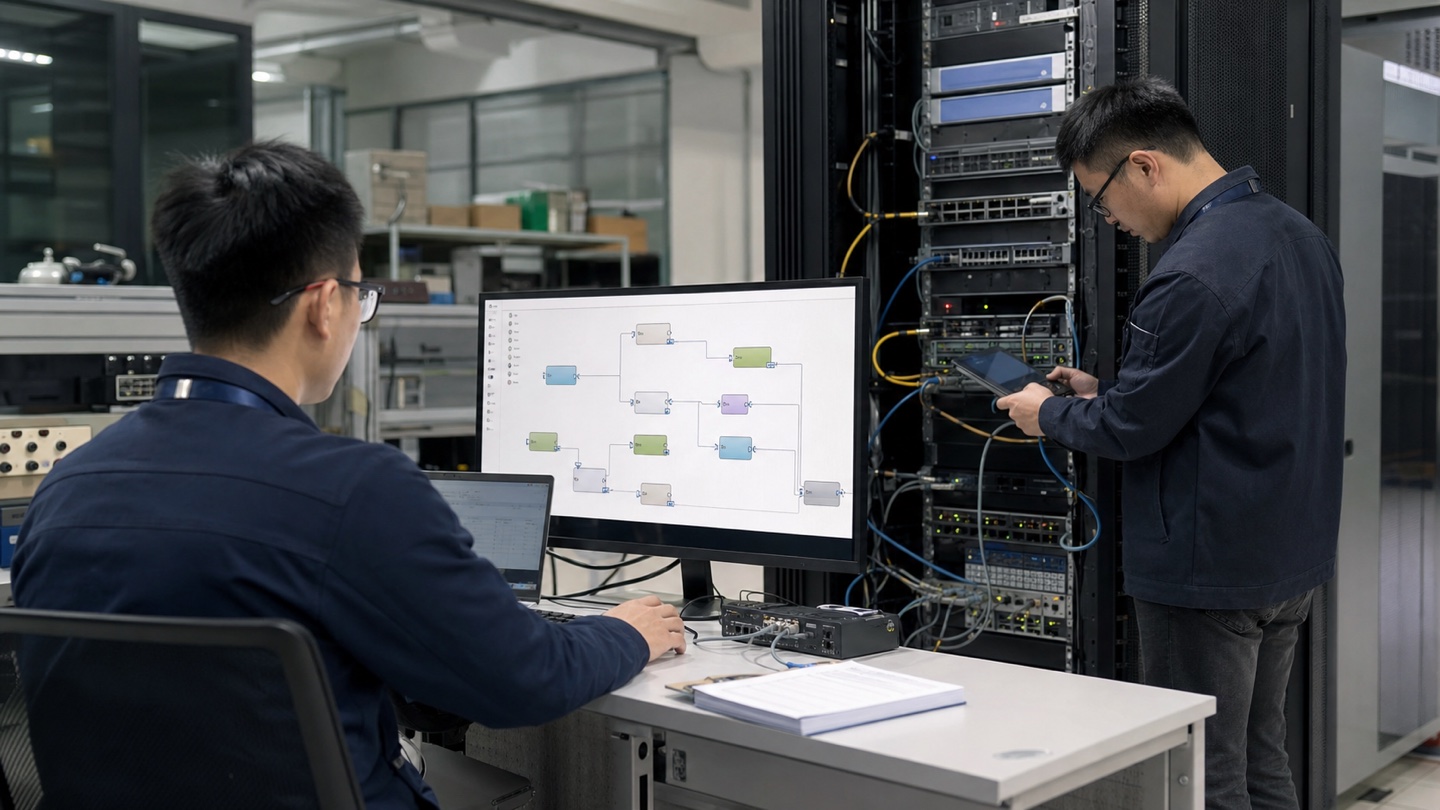
The system resolves the boundaries of MCP ' s responsibilities with A2A, enterprise integration structures, security authorizations, Agent catalogues, observability and sequencing of the operation, avoiding mistaking protocol access as operational service.

The Internet technology architecture helps enterprises to absorb increased traffic, channel innovation and business model upgrading through flexible capacity, rapid delivery, data connectivity and platform reuse.

The selection should combine operational complexity, team size, frequency of delivery, performance boundaries and operational maturity.

The HSD system requires a complete stability system from capacity assessment, traffic management, caches, walk-through processing, databases and downgraded scenarios.

Cloud-based life increases the speed of software delivery, resource utilization and system resilience through packagings, automated platforms, flexible resources and observational systems.

The high availability of the core system requires clear service targets, elimination of single-point malfunctions, development of data backup and disaster tolerance and validation of recovery capacity through failure exercises.
API and IDPs are able to integrate internal systems, partners and multi-end applications to enhance capacity reuse, data flow and eco-coherence efficiency.

DevSecOps will develop, test, secure and transport components into automated delivery processes to improve the efficiency of distribution, software quality and risk control through continuous feedback.
Continued examination of the structure, delivery and implementation experience relevant to the topic.
Evolving architecture from service boundaries, containerization, governance and observability
For more information.Delivery practiceOrganize code, test, release, monitor and rollback into duplicated engineering processes
For more information.Integrated practiceProcessing interface compacts, information reliability, data consistency and cross-system anomaly compensation
For more information.The term is not uniform and is determined by system importance and contractual agreement. The parties also specify the response time, the level of deficiency and the service after the quality assurance has been completed.
View full answerEnterprise AI Transport Organization and ImplementationThe first is to judge whether the system is not working well, the results are not credible, the process is burdened, or the job is not clear. Rather than relying on training and administrative requirements, the staff should be selected to have real pain points, embed AI into existing access points, reduce duplicate entries and allow users to see the source, modification and feedback mechanisms.
View full answerenterprise AI Effectiveness, Safety and Continued OperationIf you want, AI projects are not the end of one-time delivery. Business knowledge, user queries, model versions, interfaces and policies will change, and the effects of the original adoption may be reduced. Enterprises should continuously collect failed samples, manual corrections, user feedback, costs and delays.
View full answerProduction and continuity of AI systemsThe first round should check the code and deployment version, cloud and model account numbers, keys, data flows, knowledge sources, hints and workflows, assessment, logs, costs and failure records. Do not upgrade or re-construct the model directly when there is no understanding of the means of dependency and regression.
View full answerThe thematic content is used to understand problems, professional services and solutions to develop enforceable pathways that combine the current state of the enterprise.
ZhiHua Tech provides technical IT advice, information planning, system architecture assessment, technology selection and implementation of road map services for Shanghai and national enterprises, aligning technology inputs with business objectives.
For more information.Professional servicesSoftware transportation outsourcing, system maintenance, product design, R & D quality, deployment online, monitoring backup, knowledge transfer and continuous iterative services to allow long-term software stability, maintenance and take over.
For more information.SolutionsConnect ERP, CRM, OA/BPM, HRM, SCM, WMS, MES, PLM, Finance, Cost Control, Logistics, Invoices and Data Platforms through API, synchronisation, Single Point Login and Process Organization.
For more information.SolutionsIntegrate customer, commodity, order, organizational and data capacities, reduce system isolation and duplication, and support multi-business, multi-channel and continuous expansion.
For more information.