First, clarify the scope of the operations of the technical support of individual companies
Technical support needs to be designed around real responsibility rather than replicating the sector systems of large and medium-sized enterprises. The primary task is to identify business models, customer sources, service products, delivery cycles and ways of paying back.
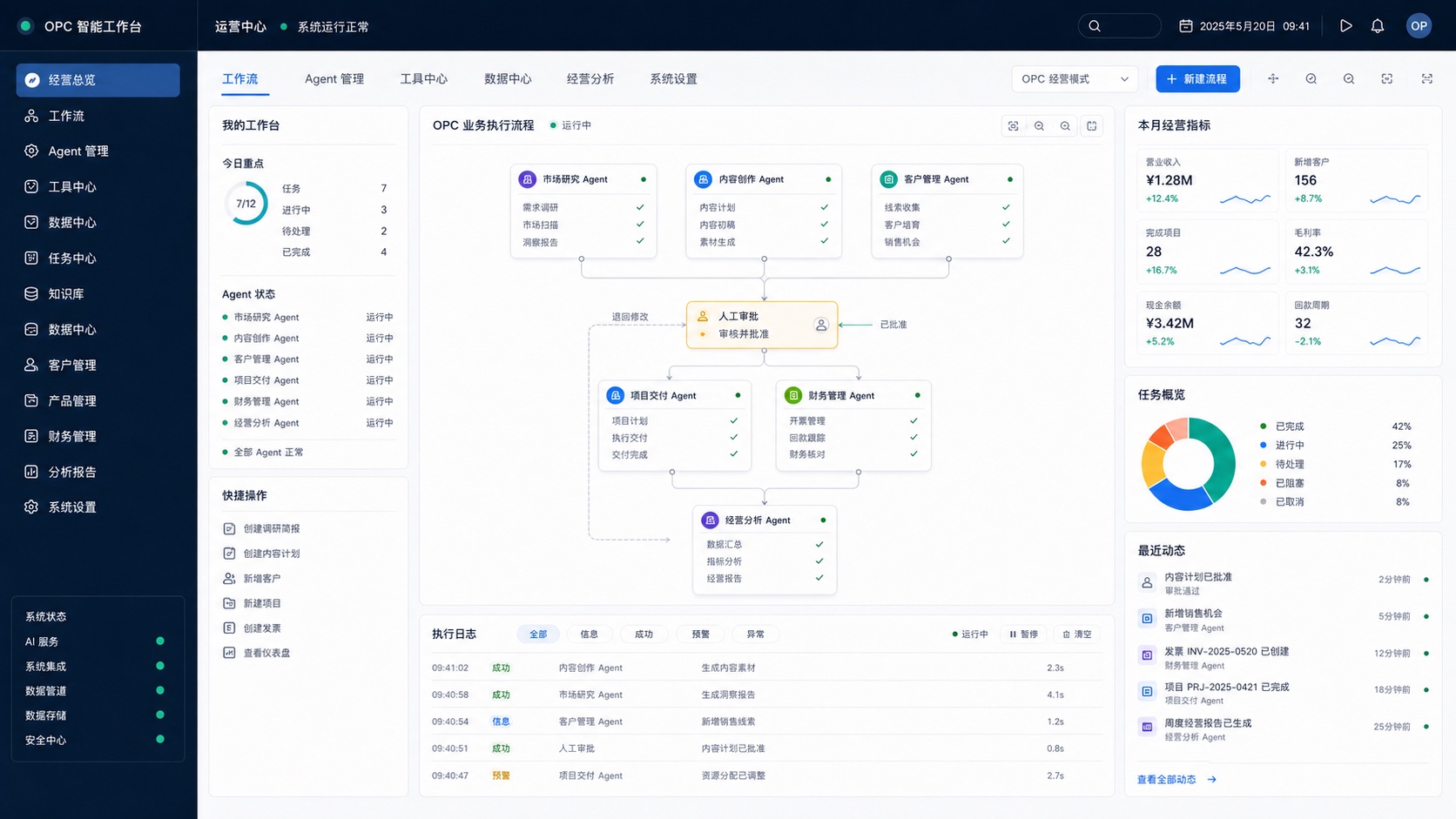
The common range of support includes posting of the network and content, customer trails and follow-up, quotation contracts, project tasks, knowledge and templates, automated notifications, data boards, account security and backup.
Select the tool by " Keep, Configure, Connect, Develop "
Take a first count of the mailboxes, forms, documents, calendars, content platforms, client management and project tools already in use, and check whether the data can be exported, supported API, and the cost of renewal and the way in which it is moved after it has been discontinued. Tools that can stabilize the task should be retained and not migrate frequently for the new concept.
Standard needs are prioritized through configuration, cross-tool information handling is linked through workflows, with proprietary rules, customer experience or long-term data value. This sequence avoids full systems being put into place when operations are not stable, and prevents reliance on large numbers of manual replications after maturity.
- Retention: existing tools have reliably fulfilled core tasks
- Configure: through field, template, privileges and views adaptation operations
- Connect: Reduce duplicate entries and omissions using API or automation
- Development: Building systems for proprietary processes, data assets or customer experience
Build a sustainable knowledge and client context for individual companies
AI Agent needs structured sources of knowledge to understand the service boundaries, brand calibres and project experiences of individual companies. It can start with service presentations, frequently asked questions, quotation rules, contract highlights, delivery templates and a record of the round-ups, and indicate the version, scope of application and timing of each information.
Customer information also needs to be centralized, at least covering sources, needs, communications findings, current phases, next steps and associated items. Knowledge and client data should be distinguished from competencies: general service knowledge can be used for content and before sale, and client information is used only for authorized projects and cannot be cross-referenced by different client assignments.
Agent and automation are about clear division of tasks.
The common AI roles of individual companies include research assistants, content assistants, threading, minutes, first drafts of the programme, delivery checks and weekly reports.
The trigger for certainty, field verification, filing of documents and status notifications are given to the ordinary workflow; the nodes of text, classification, extraction or generation of the first draft are required to be given to AI; offers, contracts, public distribution, payments and customer commitment to retain operator approvals.
- Agent is responsible for semantics and content support.
- Workstreams for steady trigger, transfer and status management
- Operator ' s responsibility for irreversible decision-making and ultimate customer liability
- Logs are responsible for explaining how mandates are implemented, modified and failed
How individual corporate technical support can control costs and safety
The costs are not only development costs, but also software subscriptions, model calls, cloud resources, domain name certificates, interface services, data backup and ongoing maintenance. It is recommended that the services be discontinued for long periods of unused or overlapping functions, based on the total cost of statistical tools, frequency of use, time saved and actual operational contributions.
The account number should be held by the operator, with multiple factors of authentication and independent password management; external collaborators use separate account numbers and minimum permissions; customer files, keys, payments and contract data are kept separately; key data are regularly exported back-up. The automated system also provides a pause switch to avoid leakage of account numbers or continued execution after error of rules.
Start a full closed circle of individual company technical support.
The first issue can start with “website or content trails to the client desk, automatically creating follow-up missions, generating pre-session summaries and creating delivery catalogues after the project is concluded.” It connects the recipients, sales and deliveries, while retaining critical judgement and allowing faster observation of whether the missing and the time for sorting is being reduced.
Example: The operator spends eight hours a week organizing clues, meetings and project status, often missing follow-up actions because the information is dispersed. The first period allows for the recording of a four-week baseline, then comparing the completeness of information with the same task load, the timeliness of follow-up, the time of manual collation and the cost of tools. The figures in the page explain only the method of receiving and inspection, and the actual target needs to be identified in the light of operational fluctuations and service risks.
- List of account numbers for business processes and tools delivered
- Configure client desk accounts, knowledge catalogues, templates and workflows
- Provides Agent ' s responsibilities, authority and explanation of anomalies
- Receiving and inspection through real task testing, training and running double drive
Individual company AI tool selection from reading findings to project input
The most likely problem after reading methodological articles is the acceptance of principles, which are not translated into the next step. It is proposed that the head of operations organize a 60-90-minute mini-workshop, choosing only one real process and not rushing to discuss the full platform.
Step 1: Establishment of a current status and sample baseline
The data are available for one to two weeks in a row, but the sample cycle and operational fluctuations are indicated. Do not set a good rate of savings before pushing the data.
Step 2: Clarifying the initial closure and inaction
The first phase is designed to allow a chain to run and be retried, rather than to stack all one-person companies' Agent road map, individual entrepreneurial technology architecture, individual companies' knowledge base into the same version.
Step 3: Match technical results to engineering evidence
It is important to maintain manual confirmation and execution logs when it comes to publishing, quotations, payments, customer commitments and data deletions. The supplier's demonstration should use a sample that is confirmed by both parties. Production data that are not publicly available can be unsensitized but cannot be replaced by idealized testing data.
Step 4: Receiving, inspection and disking with the same calibre
Assuming that the original process handles 600 tasks per month, an average of 20 minutes and a return rate of 10 per cent, the target can be stated as “six weeks after the start of the line, with a similar complexity of the task, on average, a reduction of 25 per cent in the time required, and a return rate of no higher than the original baseline.” This set of figures only demonstrates the measurement method, and does not represent any client outcome; formal indicators must be identified by the enterprise on the basis of its own sample.
- Operational material: flowchart, role, sample mission, current issues and baseline data
- Technical material: system inventory, interface, data access, deployment environment and security requirements
- Project material: first-phase scope, exclusions, liability matrix, milestones and change mechanisms
- Receiving and inspection material: test set, execution records, list of deficiencies, indicator queries and handover documents
When these materials are identified jointly by both the operational and technical parties, the method in the article is actually entered into the project. If key data, interface authorization or the responsible person are not in place, the logical next step is usually a limited diagnostic or PoC, rather than an immediate commitment to complete the work period and fixed total price.
Implement methodology to project action
- Individual corporate technical support started in closed business circles, not in the tool list
- Pre-configure mature tools, reconnect across the tool process, and customize value development
- Agent, workflow and manual decision-making must be clearly divided
- Account numbers, data, costs and maintenance capabilities should be controlled by the operator
Relevant services, programmes and decision-making guidelines
OPC technical support with individual companies
View process diagnostics, tool selection, Agent, automation, systems integration and ongoing support range
See detailsThematic portalOPC One Company and Individual Corporation Technical Support
Focus on one-person company operating systems, AI tools, knowledge and safe operating methods
See detailsCapacity casesAutomation desk for individual corporate client operations and delivery
View the clues, clients, projects, knowledge and the capacity of Agent to work together
See detailsContinuing to reconcile common issues in project decision-making
What is the normal content of technical support by an OPC company?
The first phase should be built around a true closed circle in the recipient, sale, delivery or operation, rather than a large build-up of AI tools. The tool is to be consistent with the individual's time, budget and maintenance capabilities. The ultimate goal is to reduce duplication of effort while retaining manual control over client commitment and key decision-making.
View full answerOne-man company and OPC technical supportCan AI Agent follow up on clients, quotations and dispatch contracts automatically?
AI Agent can organize leads, alert follow-up, generate drafts of quotations, fill out contract variables and prepare for delivery without recommending a price, scope or legal provision for external commitments without artificial confirmation.
View full answerOne-man company and OPC technical supportHow should data be integrated when dispersed using multiple AI tools?
First, identify the primary data system of clients, projects, contracts and knowledge, then position other AI tools as callers or processors, rather than keep a single primary record for each tool. Prioritize the use of official API, Webbook or regular export of synchronized fields, and harmonize customer and project identification. For unexportable closed tools, the risk of migration should be assessed and the critical business assets avoided.
View full answerEnterprise AI Transport Organization and ImplementationDo small and medium-sized Enterprises AI Transformation need a full-time AI team?
The first phase does not necessarily require a full-time AI team, but it must have an in-house business manager and technical interface.
View full answerNeed to build up an OPC capability for yourself?
We provide OPC capability diagnostics, AI tool selection, professional Agent, automated integration, deployment training and ongoing technical support.