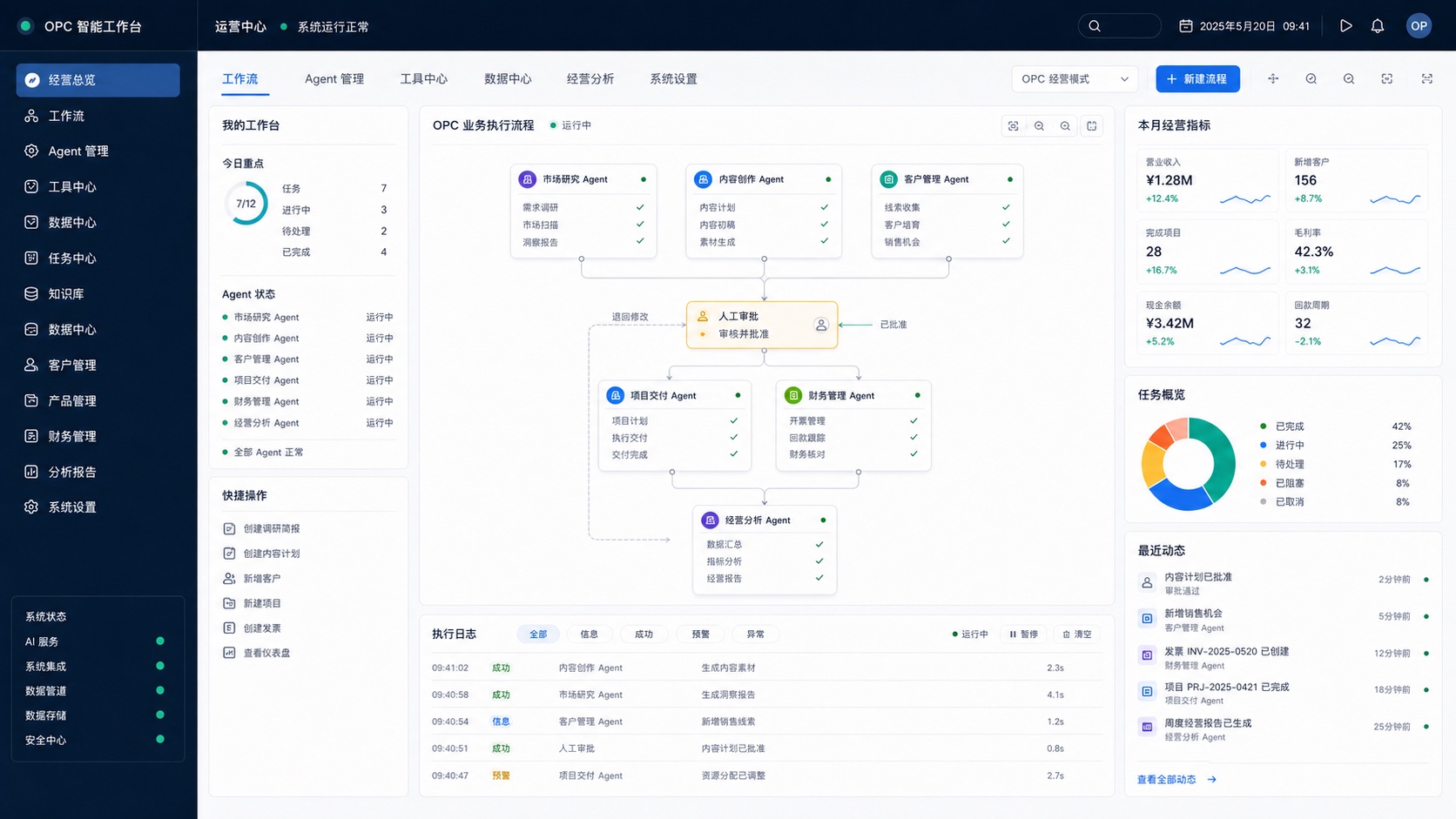
01 Operational baselineFirst, we record the real state before the modification.
The project starts with a selection of a business link that needs most improvement, interviews the actual users and takes recent samples. The processing of records around the OPC business model, mission structure and automated opportunities diagnosis, average time-consuming, waiting time, number of back-to-works, unusual numbers and manual contacts; if available data are incomplete, the baseline is one to two consecutive weeks of manual desk accounts. Without a baseline, the project can only be completed by evaluating the interface and not determining whether OPC technical support and Agent have brought about sustainable business changes.
The baseline should also indicate the scope of the statistics and exclusions. For example, processing time begins with the availability of information or with the first submission by the client, the exception fails to include third-party interfaces, and manual modifications are minor proofreading or re-processing.
02 First closed ringValidate key assumptions with minimum available scope
The first phase does not seek to cover all sectors, but rather forms a closed loop around “large models, AI tools, SaaS and open source option configurations” that can operate in real terms: clear input, processing rules, system actions, responsible roles, unusual movement and final output. Key players include at least business owners, actual users, technical interfaces and receiving and inspection managers, avoiding demand being described by management and being used on the Internet only by another group.
The need assessment corresponds each competency to the business scene, user role and sample acceptance. Matters that do not provide legitimate data, interfaces or decision makers should be included as a pre-condition or subsequent stage, and should not be included quietly in a fixed-range offer.
• Project implementationMake the process a reversible and reversible stage result
Typical paths are business and target diagnostics, high-value task sequencing, tools and Agent prototypes, workflow integration on line. Each stage should result in visible results, such as flowcharts, prototypes, interface compacts, test records, deployment descriptions or running demonstrations. Changes in demand, deficiencies, risk and decision-making records are maintained in the development process; when data migration, external interfaces or AI outputs are involved, failure retesting, manual takeover and regression programmes are designed.
The stage demonstration is not “looks fit to work”. A representative sample should be used to cover normal processes, missing fields, repeat requests, inadequate authority, time overruns and historical data anomalies from external services, and to identify problems that arise only in the production environment at an early stage.
04 Receiving and inspection operationsCommon acceptance and acceptance with delivery, evidence and indicators
The project should at least reconcile the capability diagnosis and implementation road map, tool selection and account configuration lists, exclusive Agent and workflow, and confirm source code or configuration attribution, account management, build deployment, data backup, failure response and subsequent maintenance responsibilities. In addition to functional acceptance, check privileges, security, performance, logs, recoverability and key user training to ensure that client teams are able to use and understand the system boundaries independently.
A process baseline of 800 items per month, an average of 18 minutes per unit, and a return rate of 12 per cent is only an example, not a client's performance. A line should be followed by a continuous observation of four to eight weeks at the same calibre, before judging whether or not to achieve a gradual automation of duplicate work, a person can move multiple types of professional capabilities, and a key mission process can be tracked.
Keywords and description of contentThis page contains organizational content on real service issues such as OPC technical support, OPC technical advice, OPC one-person company, and One Person Company. Keywords are used to help users and search systems identify themes, without implying a commitment to fixed effects; final scope, cycle, budget and indicators are based on project diagnosis, contract and acceptance baseline.